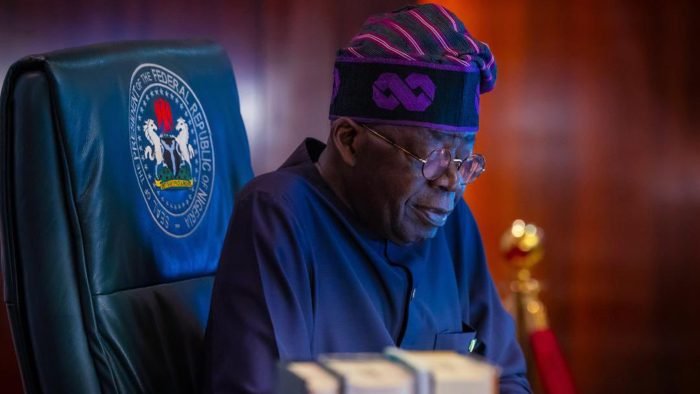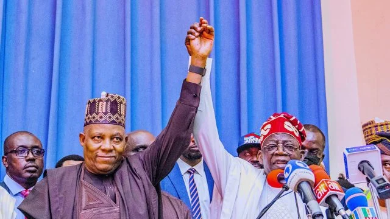
The decision by President Bola Ahmed Tinubu to retain Vice President Kashim Shettima as his running mate for the 2027 presidential election has reignited political debate over the All Progressives Congress (APC)’s Muslim-Muslim ticket.
The development has generated fresh conversations among political stakeholders, party supporters, analysts, and civil society groups regarding the political, electoral, and national implications of maintaining the same presidential ticket ahead of the next general election.
Furthermore, the renewed debate reflects the continuing significance of religion, regional balance, party strategy, and electoral considerations within Nigeria’s political landscape.
Continuity in the APC Ticket
President Tinubu’s decision to retain Vice President Shettima signals the administration’s preference for continuity as preparations gradually begin ahead of the 2027 election.
Furthermore, supporters argue that maintaining the existing leadership team provides stability, policy consistency, and continuity in implementing ongoing economic reforms, infrastructure projects, security initiatives, and governance programmes.
They believe continuity allows government policies to mature before new leadership transitions occur.
Renewed Debate Over Religious Balance
The announcement has also revived discussions surrounding the APC’s Muslim-Muslim presidential ticket, which first attracted widespread public attention during the 2023 general election.
Furthermore, some political commentators continue to argue that Nigeria’s religious and cultural diversity should be reflected in the country’s highest political offices.
Others maintain that competence, experience, and performance should remain the primary considerations in selecting candidates.
The discussion continues generating diverse opinions.
Supporters Defend the Decision
Supporters of the President’s decision argue that the Tinubu-Shettima administration should be evaluated based on governance performance rather than religious composition.
Furthermore, they contend that leadership effectiveness, economic reforms, national security efforts, and infrastructure development remain more important indicators for voters than religious identity.
They insist that democratic elections should prioritise competence and results.
Political Significance Ahead of 2027
Political observers note that the decision could shape early conversations ahead of the 2027 presidential election.
Furthermore, political parties are expected to continue reviewing electoral strategies, coalition building, regional dynamics, and voter expectations as preparations gradually intensify.
Candidate selection remains one of the most important aspects of Nigeria’s electoral process.
Focus on Governance
Several analysts have argued that public attention should remain focused on governance outcomes rather than campaign calculations alone.
Furthermore, issues such as economic growth, employment, infrastructure, security, healthcare, education, and social welfare are expected to remain major considerations for voters during future elections.
Performance continues influencing political support.
Democracy Encourages Diverse Opinions
The renewed public discussion surrounding the APC ticket highlights the vibrancy of Nigeria’s democratic environment.
Furthermore, political debate remains an important feature of democratic governance, allowing citizens, parties, and stakeholders to express differing views on national issues while participating in the political process.
Constructive dialogue strengthens democratic institutions.
Looking Towards the Next Election
Although the 2027 presidential election remains some time away, political developments continue attracting significant public interest.
Furthermore, discussions surrounding candidate selection, party strategies, governance records, and national priorities are expected to become more prominent as the electoral calendar progresses.
The coming months will likely see increased political engagement across the country.
An Evolving Political Landscape
President Bola Ahmed Tinubu’s decision to retain Vice President Kashim Shettima has once again placed the APC’s Muslim-Muslim ticket at the centre of national political discourse.
Furthermore, while opinions remain divided, the debate reflects the broader conversations surrounding leadership, representation, governance, and electoral strategy that continue to shape Nigeria’s evolving democratic landscape ahead of the 2027 general election.