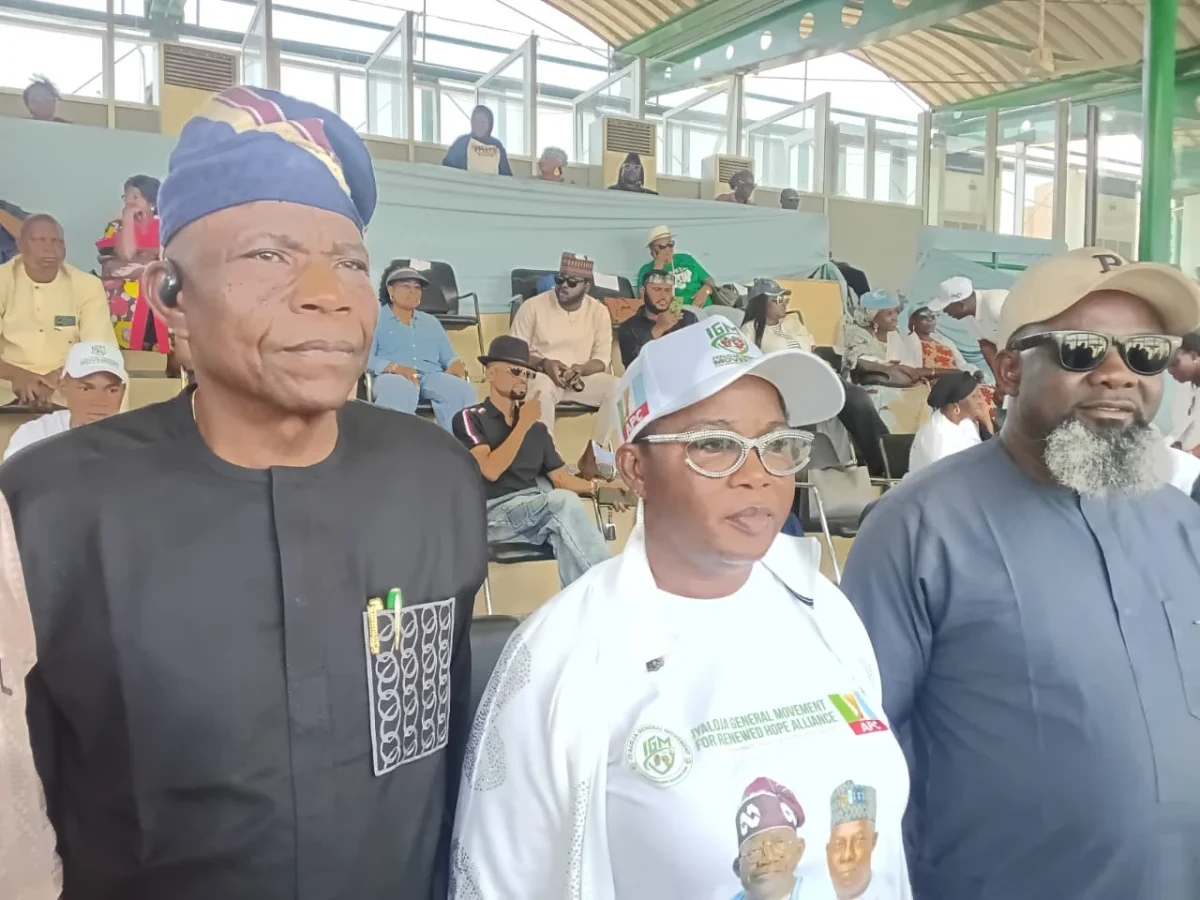
Folasade Tinubu-Ojo, daughter of President Bola Ahmed Tinubu and Iyaloja-General of Nigeria, has launched a political support movement aimed at mobilising market women, traders and other informal sector workers for her father’s re-election bid in 2027.
The initiative seeks to draw support from a segment of the economy that plays a significant role in everyday commercial activity across Nigeria. Market women, small-scale traders, artisans and other informal sector workers remain important participants in the country’s economic life, making their political engagement a notable factor in grassroots mobilisation.
With the 2027 general election approaching, political actors and support groups are increasingly focused on building networks that can connect presidential campaigns with communities, markets and local associations. Tinubu-Ojo’s initiative adds another dimension to that mobilisation effort, particularly among traders and market groups.
However, the movement’s wider political impact will depend on its reach, organisation and ability to translate its stated objective into sustained support among the people it seeks to mobilise.
Market Women and Traders at the Centre of Mobilisation
Market women and traders occupy an important position in Nigeria’s informal economy. Beyond selling goods and providing services, they sustain household incomes, distribute essential commodities and support commercial activity in communities across the country.
Their networks can also serve as channels for sharing information and organising collective activities. Consequently, political movements seeking grassroots support often engage market associations, traders’ unions and community-based groups to communicate their messages.
By focusing on these groups, Tinubu-Ojo’s movement is targeting a constituency with established community connections and a direct interest in policies affecting everyday commerce.
For many informal sector workers, issues such as inflation, transportation costs, access to credit, taxation, electricity and the purchasing power of consumers can shape their economic experiences. These concerns may also influence how traders assess government policies and political promises.
Therefore, effective engagement with market communities requires more than political mobilisation. It also involves listening to traders’ concerns and explaining how proposed policies could affect their businesses and livelihoods.
Informal Sector Workers and Nigeria’s Economy
Nigeria’s informal sector supports millions of livelihoods through retail trade, small-scale manufacturing, transportation, food distribution and other economic activities. Many workers in this sector operate small businesses that provide income for their families while helping communities access essential goods and services.
Despite their contribution, informal businesses often face challenges associated with limited access to affordable financing, unstable operating costs, infrastructure gaps and changing consumer demand.
For market women and small-scale traders, these pressures can determine whether a business expands, maintains its current level of activity or struggles to remain operational.
As a result, the economic conditions facing informal workers are likely to remain relevant to political discussions ahead of the 2027 election. Candidates and their support groups will need to address the concerns of traders while explaining their broader economic priorities.
Tinubu-Ojo’s mobilisation initiative places these workers within the political conversation surrounding her father’s re-election bid. Nevertheless, the announcement of a support movement does not, by itself, establish the level of support President Tinubu enjoys among market women or informal sector workers nationally.
Grassroots Political Networks Ahead of 2027
Grassroots mobilisation has long been an important feature of Nigerian election campaigns. Political parties and support organisations frequently rely on local associations, community leaders, professional groups and volunteers to extend their reach beyond formal campaign structures.
Market associations can provide access to established networks, making them relevant to efforts aimed at communicating political messages and encouraging participation.
However, the effectiveness of such movements depends on several factors, including their organisational structure, the credibility of their leadership, the consistency of their engagement and their ability to reach people across different communities.
Furthermore, Nigeria’s electorate is diverse. Market women and traders do not necessarily share identical political preferences, economic circumstances or expectations of government. Their views may differ according to location, business type, income and personal experience.
For that reason, a movement’s ability to attract members should not automatically be interpreted as evidence of a uniform political position across the informal sector.
As the 2027 election approaches, the movement’s activities and public engagement will provide a clearer indication of its scope and the extent to which it can sustain participation among its intended audience.
Political Support and the Expectations of Traders
While political support movements can help candidates communicate with potential supporters, economic concerns remain central to the relationship between governments and small business owners.
For traders, the practical effects of public policy often matter as much as campaign messaging. Changes in the cost of goods, transport fares, access to capital and consumer spending can directly affect daily earnings.
Consequently, any effort to mobilise this constituency will operate within a broader environment of economic expectations. Traders may assess political appeals against their experiences and their hopes for improved business conditions.
Moreover, sustained engagement requires a willingness to hear concerns that may not always align with campaign narratives. Addressing these concerns openly can help political organisations understand the priorities of the communities they seek to reach.
The movement launched by Tinubu-Ojo will therefore be watched for how it organises its activities, engages market associations and communicates its message as the election season draws closer.
Looking Ahead to the 2027 Election
Folasade Tinubu-Ojo’s launch of a support movement for President Tinubu’s re-election brings market women, traders and informal sector workers into focus as a target constituency in the emerging 2027 political landscape.
The initiative signals an effort to build support through grassroots networks and organised engagement with commercial communities. Its progress, however, will depend on the movement’s capacity to establish a broad presence and maintain meaningful relationships with the people it intends to represent.
As political mobilisation develops ahead of the election, economic conditions, public policy and voters’ individual assessments of the government are likely to remain important considerations.
Ultimately, the movement’s significance will be determined not simply by its launch, but by its subsequent activities, the participation it attracts and the extent to which it connects its political objective with the concerns of Nigeria’s market women, traders and other informal sector workers.