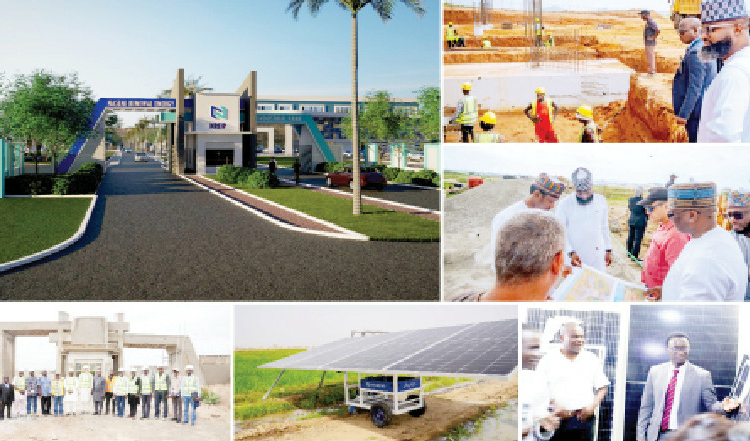
Nigeria’s renewable energy sector is entering an important phase as the National Agency for Science and Engineering Infrastructure (NASENI) intensifies efforts to connect clean energy development with local manufacturing, job creation, innovation, and economic productivity.
At the centre of this strategy is the agency’s push to move Nigeria beyond importing renewable energy equipment towards producing more of the technologies locally. NASENI’s planned and ongoing investments include renewable energy manufacturing, solar technology, research facilities, agricultural applications, and partnerships designed to strengthen the domestic energy ecosystem.
From Energy Access to Economic Productivity
Reliable electricity remains essential to productivity across Nigeria.
Furthermore, businesses require dependable power to operate machinery, preserve products, provide services, and remain competitive.
When electricity becomes unreliable, businesses often rely on alternative power sources that increase operating expenses. This can reduce profits, limit expansion, and make locally produced goods more expensive.
Renewable energy can provide another pathway.
Solar systems, mini-grids, battery technologies, and other clean-energy solutions can provide electricity closer to consumers, particularly in communities that remain underserved by conventional grid infrastructure.
NASENI Pushes Local Renewable Manufacturing
One of the agency’s most important strategies is encouraging Nigeria to manufacture renewable energy technologies rather than simply importing them.
Furthermore, NASENI has been promoting an integrated approach that combines research, innovation, manufacturing, financing, skills development, and commercialisation.
This approach can create a stronger domestic value chain.
Local manufacturers can produce equipment.
Engineers can develop new technologies.
Technicians can install and maintain systems.
Entrepreneurs can build businesses around renewable energy.
As a result, investment in clean energy could generate economic benefits beyond electricity generation.
The Gora Renewable Energy Industrial Park
A major component of NASENI’s strategy is the Renewable Energy Industrial Park at Gora in Nasarawa State.
The 40-hectare project is designed as a multi-energy industrial hub with facilities supporting solar panel manufacturing, wind-system assembly, small-hydropower equipment production, biomass technologies, research, and related activities.
Furthermore, the project is expected to create thousands of direct jobs and significantly more indirect employment through supporting industries.
This could transform renewable energy from an import-dependent market into a manufacturing opportunity.
Reducing Import Dependence
Nigeria’s growing demand for solar equipment has created a large market for imported technologies.
Furthermore, excessive dependence on imports means that a significant portion of the economic value generated by the renewable energy boom can leave the country.
Local manufacturing could change that situation.
More components could be produced domestically.
More technical expertise could remain within Nigeria.
Local suppliers could participate in production chains.
Manufacturers could eventually develop export opportunities across Africa.
This would allow renewable energy investment to contribute directly to industrial development.
Creating Jobs and Technical Skills
NASENI’s renewable energy investments could also expand employment opportunities across several areas.
Furthermore, renewable energy projects require engineers, technicians, researchers, electricians, software specialists, installers, maintenance professionals, logistics operators, and manufacturing workers.
Training these professionals can strengthen Nigeria’s technical workforce.
It can also reduce dependence on foreign expertise for maintaining critical infrastructure.
As more renewable energy projects emerge, these skills could become increasingly valuable across Nigeria’s industrial economy.
Supporting Agriculture
Renewable energy can also increase productivity within Nigeria’s agricultural sector.
Furthermore, solar-powered irrigation systems can help farmers access reliable water without depending heavily on diesel-powered pumps.
This can reduce energy costs.
It can support production beyond the rainy season.
It can improve agricultural planning.
It can also create opportunities for farmers to increase the number of production cycles they undertake.
When renewable energy supports agriculture, the benefits can extend from farms to food processing, transportation, storage, and retail markets.
Helping Small Businesses Grow
Small and medium-sized businesses are among the potential beneficiaries of stronger renewable energy infrastructure.
Furthermore, many small businesses depend heavily on electricity for their daily operations.
Barbershops need power for equipment.
Welders require electricity for machinery.
Food businesses need refrigeration.
Tailors depend on electric sewing machines.
Retailers need lighting and cooling.
Reliable renewable energy can therefore help businesses operate more consistently while potentially reducing their dependence on expensive backup generators.
Clean Energy Can Support Rural Development
Renewable energy can also bring productive activities to communities that remain far from reliable grid infrastructure.
Furthermore, electricity can support schools, health centres, agricultural processing facilities, markets, communication services, and small enterprises.
A community with reliable power can become more economically active.
Young people can develop businesses.
Farmers can process products locally.
Healthcare facilities can operate essential equipment more reliably.
Education can also benefit from improved access to electricity and digital technology.
Building an Innovation Ecosystem
NASENI’s strategy also places emphasis on connecting research with commercial production.
Furthermore, scientific discoveries have greater economic value when they can move from laboratories into products that solve real problems.
Research institutions can develop new technologies.
Manufacturers can commercialise them.
Private investors can provide capital.
Government programmes can create demand.
This ecosystem can help Nigeria develop renewable energy solutions suited to its own environmental and economic conditions.
Renewable Energy and Energy Security
Local renewable energy manufacturing can also strengthen Nigeria’s energy security.
Furthermore, producing critical equipment domestically can reduce exposure to international supply disruptions and foreign exchange pressures.
Domestic production can make equipment more accessible.
Local maintenance can reduce downtime.
Local expertise can improve system reliability.
These advantages can become increasingly important as renewable energy assumes a larger role in Nigeria’s electricity mix.
The Productivity Multiplier
The greatest potential impact of NASENI’s renewable energy investments may come from the connection between energy and other sectors.
Reliable energy supports manufacturing.
Manufacturing creates employment.
Employment increases household income.
Higher income supports consumption.
Industrial activity creates demand for transportation and services.
Research and innovation create new technologies.
Together, these effects can create a productivity multiplier that extends well beyond the renewable energy sector.
Looking Ahead
NASENI’s renewable energy investments represent an opportunity to connect Nigeria’s energy transition with its broader industrialisation ambitions.
The success of the strategy will depend on sustained financing, strong partnerships, technical expertise, effective project management, quality control, private-sector participation, and the ability to commercialise technologies at scale.
However, if these elements come together, renewable energy could become more than an alternative source of electricity.
It could become a platform for manufacturing, innovation, employment, agriculture, entrepreneurship, and regional trade.
Ultimately, NASENI’s renewable energy investments have the potential to power Nigeria’s productivity by providing cleaner energy while simultaneously building factories, developing technical skills, creating jobs, supporting businesses, strengthening agriculture, reducing import dependence, and establishing a domestic technology ecosystem capable of driving long-term economic growth.