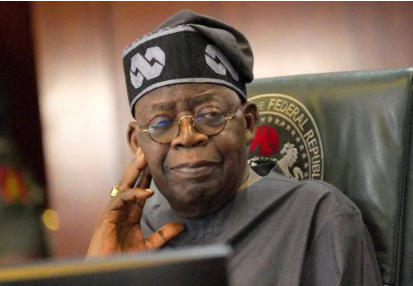
The National Publicity Secretary of the All Progressives Congress (APC), Felix Morka, has claimed that President Bola Ahmed Tinubu has performed better than every democratically elected president in Nigeria during their respective terms in office.
Morka made the assertion while defending the Tinubu administration’s economic policies and overall performance, arguing that the President inherited an economy in severe difficulty when he assumed office in 2023.
The APC spokesman said the administration’s performance should be assessed through the country’s economic indicators and the changes introduced under Tinubu’s leadership.
Morka Praises Tinubu’s Performance
Morka’s assessment places Tinubu ahead of previous democratically elected presidents since Nigeria returned to civilian rule in 1999.
Furthermore, he argued that the President has demonstrated the political willingness to make difficult decisions aimed at addressing longstanding economic problems.
The APC spokesman maintained that the administration inherited serious economic challenges from previous governments.
He also argued that Tinubu’s policies have begun producing improvements at the macroeconomic level.
Economic Reforms Remain Central
Economic reform has remained one of the defining features of the Tinubu administration.
Furthermore, the government has introduced significant policy changes affecting fuel subsidies, taxation, foreign exchange, government revenue, investment, and domestic production.
These reforms have generated intense public debate because of their effects on households and businesses.
However, the APC maintains that difficult reforms became necessary to address structural weaknesses within the economy and establish a stronger foundation for future growth.
Tinubu Inherited a Difficult Economy
Morka argued that Tinubu inherited an economy that was already facing substantial problems.
Furthermore, he attributed many of those difficulties to successive administrations and specifically criticised the previous 16-year period of Peoples Democratic Party governance.
He described former President Muhammadu Buhari’s administration as a transitional government that helped prevent further deterioration before Tinubu assumed office.
According to Morka, Tinubu subsequently inherited responsibility for implementing deeper reforms.
APC Highlights Macroeconomic Progress
The APC spokesman said the administration’s economic indicators demonstrate the impact of its policies.
Furthermore, he argued that Nigeria has moved away from what he described as severe macroeconomic difficulties under the present administration.
The party has continued to defend its reforms as necessary steps towards improving government revenue, strengthening investment, and increasing economic productivity.
However, the specific comparison between Tinubu and every previous elected president remains Morka’s political assessment rather than an independently established ranking.
Cost of Living Remains Important
Despite the APC’s positive assessment, the cost of living remains an important part of the national conversation.
Furthermore, many Nigerians continue to assess government performance through household experiences involving food prices, transportation expenses, business costs, employment opportunities, and purchasing power.
Economic reforms can produce long-term benefits.
However, citizens also expect those benefits to eventually translate into improved living conditions.
The government therefore faces continued pressure to ensure that macroeconomic improvements become increasingly visible at household and community levels.
Infrastructure and Investment
The Tinubu administration has also emphasised infrastructure development and investment as important components of its economic strategy.
Furthermore, road construction, transport infrastructure, housing, energy projects, and other developments can support economic activity by improving connectivity and reducing some barriers facing businesses.
Better infrastructure can support trade.
Improved transportation can reduce delays.
Construction can create employment.
Investment can also expand productive capacity.
These areas are expected to remain important in the APC’s campaign narrative ahead of 2027.
Reforms and Long-Term Growth
Supporters of Tinubu argue that some of the administration’s reforms should be judged over a longer period because structural economic changes rarely produce immediate benefits for every citizen.
Furthermore, the government has maintained that its policies are designed to create a more sustainable economic system.
The administration has sought to strengthen public finances.
It has encouraged domestic production.
It has pursued greater private-sector investment.
It has also promoted policies aimed at attracting capital into key sectors.
2027 Election Raises the Stakes
Morka’s claim comes as political activities intensify ahead of the 2027 general election.
Furthermore, the APC is expected to make the President’s performance a central part of its argument for securing another mandate.
The ruling party will seek to highlight reforms and achievements.
Opposition parties are expected to challenge those claims.
Voters will ultimately compare government policies with their personal experiences and expectations.
How Should Presidential Performance Be Measured?
Comparing different presidents requires clear and consistent indicators.
Furthermore, factors such as economic growth, inflation, employment, security, infrastructure, investment, public services, debt, and household welfare can influence assessments of presidential performance.
Each administration also operates under different circumstances.
Global economic conditions can change.
Oil prices can rise or fall.
Security challenges can evolve.
Population pressures can increase.
Therefore, claims about which president performed best depend significantly on the criteria used for comparison.
APC Builds Tinubu’s 2027 Narrative
Morka’s statement nevertheless strengthens the APC’s emerging political narrative ahead of the next presidential election.
Furthermore, the party is positioning Tinubu as a leader willing to implement difficult reforms while pursuing long-term economic transformation.
The APC will need to demonstrate that its claims translate into measurable improvements.
It will also need to convince voters that continued implementation of the administration’s policies can deliver stronger economic outcomes.
Looking Ahead
Felix Morka’s claim that President Bola Ahmed Tinubu has outperformed every democratically elected Nigerian president represents a strong endorsement from the ruling party’s leadership.
The statement is likely to remain part of the political debate as the country moves closer to the 2027 election.
For the APC, the challenge will be demonstrating the claim through measurable economic, infrastructure, investment, employment, and governance outcomes.
Ultimately, Nigerians will judge the Tinubu administration not only through political declarations but through the tangible changes they experience in their businesses, communities, households, and daily lives as the country moves towards the 2027 general election.