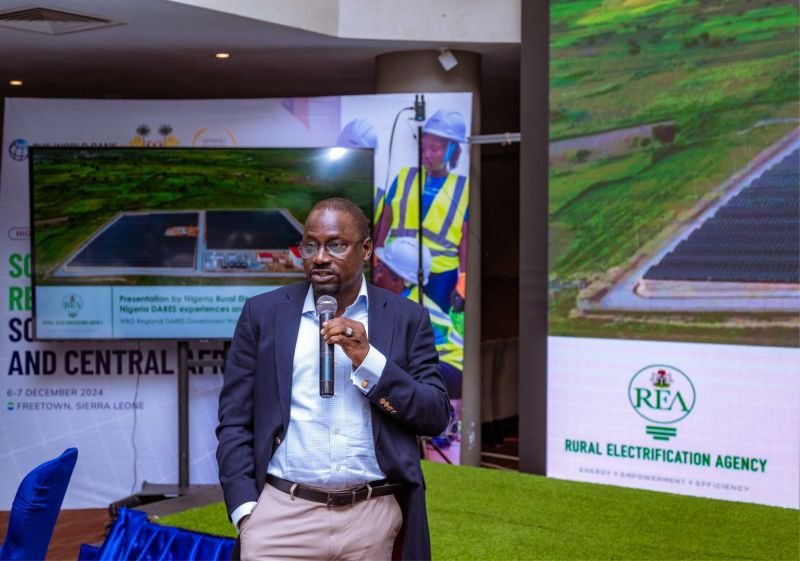
The Managing Director of the Rural Electrification Agency (REA), Dr. Abba Aliyu, has disclosed that the agency has successfully completed a nationwide energy mapping exercise that identified more than 750,000 communities across Nigeria, describing the achievement as a major milestone in the country’s effort to expand electricity access, stimulate economic growth, and support emerging technologies.
Speaking with selected journalists, Dr. Aliyu explained that the comprehensive mapping exercise provides government, investors, development partners, and private sector operators with reliable information that will guide future electrification projects while improving planning and investment decisions.
Furthermore, he stated that electricity remains one of the most important foundations for sustainable national development because reliable power drives industrialisation, strengthens businesses, supports education and healthcare, expands digital services, and creates opportunities for innovation and entrepreneurship.
According to the REA Managing Director, the nationwide exercise represents one of the most extensive energy data initiatives undertaken in Nigeria, positioning the country to implement more targeted and efficient rural electrification programmes.
He also emphasised that improving electricity access remains essential for unlocking Nigeria’s economic potential while supporting the Federal Government’s broader development agenda.
A Landmark Energy Mapping Exercise
Dr. Abba Aliyu described the nationwide mapping project as a transformational achievement.
Furthermore, identifying more than 750,000 communities provides valuable information capable of improving future electricity planning throughout Nigeria.
Data improves planning.
Reliable information enables policymakers and investors to make better decisions regarding infrastructure development.
Knowledge strengthens implementation.
Electricity Powers Economic Growth
The REA Managing Director emphasised that electricity serves as one of the strongest drivers of economic development.
Furthermore, reliable power enables businesses to increase production, reduce operating costs, improve efficiency, and expand employment opportunities.
Electricity drives prosperity.
According to him, communities with dependable electricity experience stronger commercial activities and improved living standards.
Power transforms economies.
Supporting Rural Development
Expanding electricity access remains particularly important for rural communities.
Furthermore, reliable energy improves agricultural processing, small businesses, healthcare delivery, educational services, and household productivity.
Rural electrification changes lives.
Dr. Aliyu explained that electricity enables communities to participate more actively in Nigeria’s growing economy.
Development reaches every community.
Technology Depends on Reliable Power
The REA boss stressed that emerging technologies require stable electricity.
Furthermore, artificial intelligence, digital services, financial technology, telecommunications, manufacturing automation, and innovation ecosystems all depend upon reliable energy infrastructure.
Technology requires electricity.
Without adequate power, many modern industries cannot operate efficiently or compete globally.
Energy supports innovation.
Better Data Encourages Investment
The nationwide mapping exercise also strengthens investor confidence.
Furthermore, reliable energy data helps private investors identify opportunities while reducing uncertainty surrounding electrification projects.
Accurate information attracts investment.
Dr. Aliyu noted that stronger collaboration between government and investors becomes easier whenever dependable planning information is available.
Confidence encourages development.
Improving Infrastructure Planning
Infrastructure development benefits significantly from comprehensive mapping.
Furthermore, identifying communities accurately allows resources to be allocated more efficiently while reducing duplication and improving project implementation.
Planning improves efficiency.
According to the agency, data-driven decision-making strengthens the long-term sustainability of electrification programmes.
Preparation reduces waste.
Strengthening Nigeria’s Digital Economy
Electricity remains central to Nigeria’s digital transformation ambitions.
Furthermore, expanding reliable power infrastructure supports digital education, online commerce, innovation hubs, financial inclusion, and technology-driven entrepreneurship.
Digital growth needs reliable energy.
The REA Managing Director explained that stronger electricity access accelerates broader economic modernisation.
Power supports digital opportunities.
Creating Opportunities for Communities
Improved electrification extends benefits beyond lighting homes.
Furthermore, electricity supports healthcare facilities, educational institutions, manufacturing, agriculture, hospitality, transportation, and countless small businesses.
Power creates opportunity.
Communities with reliable electricity often experience greater economic participation and improved quality of life.
Energy strengthens livelihoods.
Partnerships Remain Important
Dr. Aliyu acknowledged the importance of collaboration in achieving nationwide electrification.
Furthermore, government institutions, development partners, financial organisations, and private investors all contribute to expanding electricity access.
Partnerships accelerate progress.
Coordinated efforts improve implementation while strengthening long-term sustainability.
Shared responsibility delivers results.
Looking Toward the Future
The Rural Electrification Agency remains committed to expanding electricity access across Nigeria.
Furthermore, the nationwide energy mapping exercise provides a strong foundation for future projects capable of reaching underserved communities.
Planning shapes the future.
Dr. Aliyu expressed confidence that improved infrastructure, stronger investments, technological innovation, and continued collaboration will accelerate Nigeria’s electrification agenda.
Progress requires consistency.
Looking Ahead
The Rural Electrification Agency’s successful identification of more than 750,000 communities through its nationwide energy mapping exercise represents a significant milestone in Nigeria’s effort to strengthen electricity access and accelerate national development.
Furthermore, Dr. Abba Aliyu’s emphasis on the relationship between reliable electricity, economic growth, technological innovation, and digital transformation highlights the strategic importance of expanding modern energy infrastructure across every part of the country.
As Nigeria continues investing in rural electrification, stronger planning supported by comprehensive energy data is expected to improve project implementation, attract greater private investment, expand opportunities for businesses, strengthen rural economies, encourage technological advancement, and improve the quality of life for millions of Nigerians. Through sustained investment, strategic partnerships, and reliable infrastructure planning, the country continues building a stronger foundation for inclusive economic growth and long-term national prosperity.