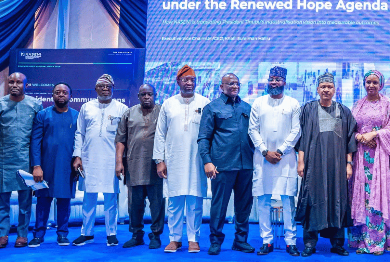
Nigeria’s Minister of Information and National Orientation, Mohammed Idris, has stated that President Bola Ahmed Tinubu’s Renewed Hope Agenda is translating government policies into tangible development outcomes, including infrastructure projects, employment opportunities, innovation, industrial expansion, and sustained economic growth.
The minister explained that the administration remains committed to implementing reforms that move beyond policy formulation to measurable results capable of improving the lives of Nigerians while strengthening the country’s productive sectors.
Furthermore, Idris noted that the Federal Government is intensifying efforts to accelerate industrialisation through strategic investments in science, technology, innovation, and research, describing these sectors as critical pillars for building a modern, competitive, and diversified economy.
According to him, expanding technological capacity and encouraging innovation will not only create new employment opportunities but also improve productivity, attract investment, strengthen local industries, and position Nigeria for long-term sustainable development.
He added that the Renewed Hope Agenda continues to focus on policies designed to stimulate inclusive economic growth while encouraging private sector participation and expanding opportunities for businesses and entrepreneurs.
From Policy to Practical Results
Mohammed Idris emphasised that government reforms are producing visible outcomes.
Furthermore, the administration remains focused on implementing programmes that generate measurable economic and social benefits across the country.
Implementation builds confidence.
Results strengthen public trust.
Progress requires consistency.
Creating Employment Opportunities
The minister identified job creation as one of the major objectives of ongoing reforms.
Furthermore, investments in infrastructure, manufacturing, technology, and innovation continue to expand employment opportunities across different sectors.
Employment strengthens families.
Economic participation supports national development.
Opportunity encourages productivity.
Science and Technology as Growth Catalysts
Science and technology remain central to Nigeria’s industrialisation strategy.
Furthermore, innovation-driven development enables industries to become more productive, competitive, and globally relevant.
Technology accelerates progress.
Innovation strengthens competitiveness.
Research supports sustainable growth.
Supporting Industrial Development
The administration continues prioritising industrial expansion.
Furthermore, strengthening local production encourages value addition, increases productivity, and reduces dependence on imported goods.
Industrialisation creates prosperity.
Manufacturing supports economic resilience.
Investment encourages expansion.
Encouraging Innovation
Innovation remains an important driver of modern economies.
Furthermore, supporting research institutions, technology startups, and creative industries encourages the development of solutions that address national challenges.
Innovation creates opportunity.
Creative thinking drives transformation.
Ideas strengthen development.
Strengthening Economic Growth
The Renewed Hope Agenda seeks to stimulate long-term economic expansion.
Furthermore, investments across key sectors are expected to improve productivity while attracting domestic and international investment.
Growth supports national prosperity.
Diversification strengthens resilience.
Investment encourages confidence.
Private Sector Partnership
The minister also highlighted the importance of collaboration with the private sector.
Furthermore, sustainable economic development depends on strong partnerships between government, investors, businesses, and innovation-driven enterprises.
Partnership expands opportunity.
Collaboration improves outcomes.
Shared commitment drives progress.
Looking Ahead
Mohammed Idris remarks underscore the Federal Government’s position that President Bola Ahmed Tinubu’s Renewed Hope Agenda is focused on delivering practical development outcomes through infrastructure, innovation, employment generation, and industrial growth. Furthermore, continued investment in science, technology, and research is expected to strengthen Nigeria’s productive capacity while supporting economic diversification and long-term competitiveness.
As implementation continues across multiple sectors, sustained collaboration between government, industry, research institutions, and the private sector will remain essential for accelerating industrialisation, creating quality jobs, encouraging innovation, and building a stronger economy capable of delivering lasting prosperity for Nigerians.