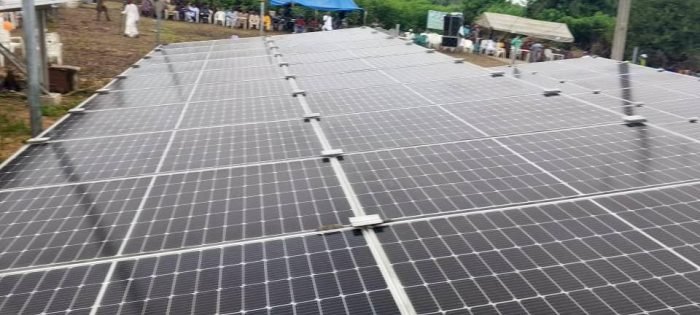
The Managing Director of the Rural Electrification Agency (REA), Abba Abubakar Aliyu, has disclosed that solar energy now contributes approximately 20 per cent of Nigeria’s electricity supply, expressing confidence that the figure could rise to 50 per cent by 2028 if the current pace of deployment and private-sector investment is sustained.
Aliyu made the disclosure on Thursday during the just concluded 25th Nigerian Oil and Gas (NOG) Energy Week in Abuja, where stakeholders from across the energy sector gathered to discuss strategies for expanding reliable electricity access and accelerating Nigeria’s energy transition.
Furthermore, he noted that the rapid expansion of solar power demonstrates the growing role of renewable energy in addressing Nigeria’s electricity challenges while supporting economic growth and environmental sustainability.
Solar Energy Recording Remarkable Growth
According to the REA boss, Nigeria has witnessed remarkable progress in solar energy deployment over the past few years.
Furthermore, increasing investments in off-grid and distributed renewable energy systems have significantly expanded electricity access to households, businesses, schools, hospitals, and underserved communities across the country.
Aliyu explained that the consistent deployment of solar projects has steadily increased the contribution of renewable energy to Nigeria’s overall electricity generation mix.
He expressed optimism that continued investments would further accelerate this growth.
Private Sector Driving Expansion
Aliyu attributed much of the progress to stronger collaboration between the government and private investors.
Furthermore, partnerships with renewable energy developers, financial institutions, development organisations, and technology companies have expanded access to financing, technical expertise, and innovative energy solutions.
He noted that private-sector participation remains essential for scaling renewable energy projects capable of meeting Nigeria’s growing electricity demand.
Public-private partnerships strengthen energy development.
Nigeria Emerging as Renewable Energy Manufacturing Hub
Beyond electricity generation, the REA Managing Director stated that Nigeria is gradually transitioning from being primarily a consumer of renewable energy equipment to becoming a regional manufacturing hub.
Furthermore, he revealed that manufacturers located within the Lagos–Sagamu industrial corridor have significantly expanded their production capacity to meet increasing domestic demand while supplying neighbouring West African countries.
Locally manufactured solar photovoltaic panels are already finding markets beyond Nigeria’s borders.
This development strengthens regional industrial competitiveness.
Expanding Local Manufacturing Capacity
Aliyu disclosed that approximately 3.7 gigawatts of solar photovoltaic manufacturing capacity is currently under development to support Nigeria’s growing renewable energy industry.
Furthermore, expanding local production is expected to reduce dependence on imported equipment, lower project costs, create employment opportunities, and strengthen Nigeria’s industrial base.
Domestic manufacturing also positions Nigeria to become a leading supplier of renewable energy technologies within Africa.
Industrial development complements energy transition.
Gas Still Needed for Grid Stability
Despite the rapid growth of renewable energy, industry stakeholders maintained that conventional gas-fired power plants will continue playing an important role in Nigeria’s electricity sector.
Furthermore, experts explained that renewable energy sources such as solar remain intermittent because electricity generation depends on weather conditions and daylight availability.
Gas-fired thermal plants therefore remain essential for stabilising the national grid and ensuring uninterrupted electricity supply.
A balanced energy mix supports reliability.
Supporting Nigeria’s Energy Transition
The discussions during the NOG Energy Week highlighted Nigeria’s determination to pursue cleaner energy while maintaining energy security.
Furthermore, the gradual expansion of renewable energy aligns with national efforts to improve electricity access, reduce carbon emissions, encourage private investment, and promote sustainable economic development.
Government agencies continue implementing policies that encourage greater adoption of renewable energy technologies across the country.
Clean energy supports long-term development.
Improving Electricity Access
The Rural Electrification Agency has remained at the forefront of expanding electricity access, particularly in underserved rural communities.
Furthermore, its renewable energy programmes have delivered off-grid solar solutions to thousands of homes, educational institutions, healthcare facilities, agricultural enterprises, and small businesses.
These interventions continue improving livelihoods while stimulating local economic activities.
Reliable electricity transforms communities.
Future Outlook for Nigeria’s Energy Sector
Aliyu expressed confidence that Nigeria’s renewable energy sector will continue recording significant progress over the coming years.
Furthermore, sustained government support, increased private investment, expanded local manufacturing, and stronger policy implementation are expected to accelerate solar deployment nationwide.
As solar energy continues gaining a larger share of Nigeria’s electricity supply, the country is well positioned to strengthen energy security, improve electricity access, promote industrialisation, create employment opportunities, reduce dependence on fossil fuels, and advance its transition toward a cleaner, more resilient, and sustainable energy future.