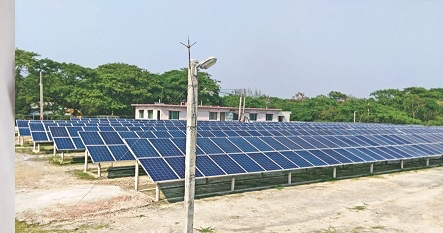
The Managing Director and Chief Executive Officer of the Rural Electrification Agency (REA), Abba Abubakar Aliyu, has unveiled an ambitious strategy to deepen electricity access across Nigeria through the deployment of interconnected mini-grids, describing the initiative as a major step toward achieving universal access to reliable and affordable power.
Aliyu explained that interconnected mini-grids represent a practical solution for addressing Nigeria’s electricity deficit by extending power supply to underserved communities while complementing the national grid.
Furthermore, he noted that the initiative aligns with the Federal Government’s broader agenda of expanding energy access, promoting industrialisation, stimulating economic growth, and improving the quality of life for millions of Nigerians.
Interconnected Mini-Grids to Complement National Grid
According to the REA boss, interconnected mini-grids will serve as an important complement to Nigeria existing electricity infrastructure.
Furthermore, the systems are designed to operate alongside the national grid while providing stable electricity to communities, commercial centres, educational institutions, healthcare facilities, and industrial clusters.
This approach enhances energy reliability by reducing dependence on a single source of electricity supply.
Diversified power systems improve energy resilience.
Expanding Electricity Access Nationwide
Aliyu reaffirmed the agency’s commitment to ensuring that more Nigerians gain access to reliable electricity regardless of their geographical location.
Furthermore, interconnected mini-grids provide an effective solution for communities that experience inadequate power supply or remain underserved by conventional electricity infrastructure.
The expansion of these systems is expected to accelerate progress toward universal electricity access across the country.
Reliable electricity promotes inclusive development.
Supporting Economic Growth
The REA Managing Director emphasised that improved electricity access serves as a catalyst for economic development.
Furthermore, reliable power enables businesses to increase productivity, lowers operating costs, attracts investment, and creates employment opportunities across various sectors of the economy.
He noted that access to electricity remains fundamental to improving industrial output and supporting sustainable enterprise growth.
Energy powers economic transformation.
Promoting Renewable Energy Integration
Aliyu explained that many interconnected mini-grids will incorporate renewable energy technologies, particularly solar power, alongside other generation sources.
Furthermore, integrating renewable energy into Nigeria’s electricity mix supports environmental sustainability while reducing dependence on fossil fuels.
Clean energy solutions also contribute to improved energy security and long-term resilience.
Renewable energy supports sustainable development.
Encouraging Private Sector Investment
The agency continues encouraging private sector participation in developing Nigeria off-grid electricity market.
Furthermore, partnerships with investors, development finance institutions, technology providers, and energy developers remain essential for expanding interconnected mini-grid projects nationwide.
Aliyu stated that government policies continue creating an investor-friendly environment capable of attracting greater private capital into the electricity sector.
Public-private partnerships strengthen infrastructure development.
Improving Rural Development
The deployment of interconnected mini-grids is expected to significantly improve living conditions in rural and underserved communities.
Furthermore, access to stable electricity enhances healthcare delivery, supports educational institutions, improves agricultural productivity, encourages digital connectivity, and stimulates local economic activities.
Communities with reliable electricity experience faster social and economic development.
Energy improves livelihoods.
Strengthening Nigeria’s Energy Transition
Aliyu noted that interconnected mini-grids form an important component of Nigeria’s long-term energy transition strategy.
Furthermore, decentralised electricity systems increase flexibility while improving the country’s ability to meet growing energy demand through diversified generation sources.
The strategy also supports national efforts to modernise the electricity sector and improve overall grid reliability.
Innovation strengthens the energy sector.
Driving Sustainable Electricity Access
The Rural Electrification Agency remains committed to implementing innovative solutions capable of addressing Nigeria’s longstanding electricity challenges.
Furthermore, the expansion of interconnected mini-grids reflects the agency’s determination to deliver reliable, affordable, and sustainable electricity to millions of Nigerians while supporting national development objectives.
As implementation progresses, the initiative is expected to strengthen electricity access, encourage private investment, promote renewable energy adoption, improve rural development, stimulate industrial growth, create employment opportunities, and accelerate Nigeria’s journey toward universal access to modern energy services.