President Bola Ahmed Tinubu has announced approval for the Eastern Gas Pipeline Network and the Eastern Nigerian Railway Line, signalling a renewed push to expand infrastructure, improve electricity supply and strengthen economic connectivity across the South-East and other parts of Nigeria.
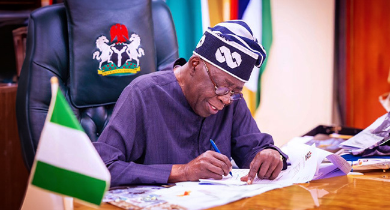
Tinubu made the announcement on Saturday, November 28, 2026, during the All Progressives Congress (APC) South-East presidential campaign rally at Michael Okpara Square in Enugu. He said the projects would connect the eastern, southern and northern regions, while creating opportunities for industrial growth, trade and transportation.
“The Eastern Gas Pipeline is approved. We are working on it. Also approved is a Nigerian railway line. We will connect you. Connect the East, connect the South, connect the North. It is our honest promise for development,” the President said.
He added that he was working with Enugu State Governor Peter Mbah to advance the gas pipeline project, while promising improvements in electricity supply across the region.
The announcement places two major infrastructure proposals at the centre of the administration’s development commitments to the South-East.
Eastern Gas Pipeline to Support Industrial Development
The proposed Eastern Gas Pipeline Network is expected to improve access to natural gas for industrial and commercial users across the region.
The project is particularly significant because reliable energy supply remains an important requirement for manufacturing, processing, power generation and other productive activities. Industries that depend on gas could benefit from improved availability, potentially reducing energy constraints and supporting business expansion.
The Federal Government had earlier commenced plans for a proposed 400-kilometre gas pipeline linking the ANOH Gas Processing Plant in Imo State with industrial and commercial centres across Abia, Anambra, Ebonyi, Enugu and Imo states.
The proposed network is being developed through collaboration involving the South-East Development Commission, its investment company, GasSync and NNPC Gas Marketing Limited.
Earlier project plans indicated a proposed construction commencement in the first quarter of 2027, with first gas delivery projected for the second quarter of 2028. These timelines remain projections and will depend on project execution, financing, approvals and other implementation requirements.
Tinubu’s latest announcement reinforces the administration’s stated support for the project. However, the practical impact will depend on the commencement of construction, completion of the network and the establishment of connections to intended industrial users.
Eastern Railway Line to Improve Regional Connectivity
The President also announced approval for the Eastern Nigerian Railway Line, which he said would form part of a broader national railway network connecting different regions.
Rail infrastructure can support the movement of passengers and goods, reduce pressure on road transportation and improve access to markets. For the South-East, stronger rail connections could help businesses move agricultural produce, manufactured goods and other commodities more efficiently.
Tinubu presented the proposed railway as part of his commitment to connecting the East with the South and North.
Nevertheless, details of the proposed line’s route, construction schedule, financing structure, technical specifications and delivery milestones were not fully outlined in the announcement. These details will be important in determining the project’s scope and the communities and commercial centres it will serve.
A clear implementation framework will also be necessary to establish how the Eastern railway will integrate with existing and planned rail infrastructure across the country.
Tinubu Links Infrastructure to Improved Electricity Supply
During his address, Tinubu connected the gas pipeline proposal with his promise of improved electricity supply in the South-East.
Natural gas plays an important role in Nigeria’s electricity generation system, particularly through gas-fired power plants. Improving gas availability can therefore support power generation, although dependable electricity also requires functioning generation facilities, transmission infrastructure, distribution networks and effective sector coordination.
The proposed pipeline could strengthen the energy supply chain by making gas more accessible to industrial and power-sector users. However, the delivery of improved electricity will depend on several other investments and operational improvements across the power sector.
The President also highlighted the importance of collaboration with Governor Peter Mbah in advancing the regional gas project.
Wider Infrastructure Commitments to the South-East
The gas and railway announcements formed part of Tinubu’s wider infrastructure engagements during his visit to Enugu.
At the event, the President commissioned the Eke-Obinagu Junction flyover along the Enugu-Abakaliki Road and a completed 33-kilometre section of the Enugu-Onitsha dual carriageway. The road section was constructed with reinforced concrete pavement.
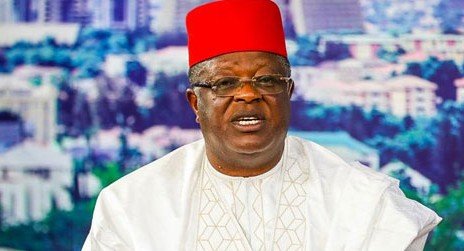
Minister of Works David Umahi also disclosed that Tinubu had approved the dualisation of two additional roads: the 104-kilometre Anam-Abaji Road and the 67.4-kilometre Uga-Okigwe Road, which links Anambra and Imo states.
These road projects, alongside the proposed gas pipeline and railway line, reflect the administration’s infrastructure commitments to improving transportation and economic connections in the region.
The President also promised interest-free loans for farmers, saying the support would reduce the financial burden of agricultural production. He further pledged increased investment in education and youth development, describing education as an important tool for reducing poverty.
Implementation Will Determine the Projects’ Impact
The approval announcements have raised expectations about infrastructure development in the South-East. However, translating them into lasting economic benefits will require clear project plans, funding arrangements, procurement processes, construction schedules and effective oversight.
For the gas pipeline, stakeholders will need clarity on construction, supply arrangements, distribution connections and access for industrial users. For the railway, route definition, financing, land acquisition, technical design and integration with the national rail network will be central to implementation.
The government will also need to provide regular updates so that businesses, communities and investors can assess progress and plan around the proposed infrastructure.
If delivered as outlined, the projects could strengthen the South-East’s industrial capacity, improve regional connectivity and support the movement of people and goods across Nigeria.
Tinubu’s announcement therefore represents an important policy commitment. Its ultimate significance, however, will be measured by the progress made from approval to construction, completion and actual service delivery.