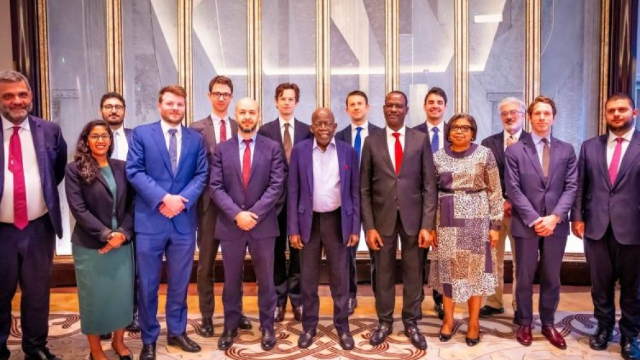
President Bola Ahmed Tinubu has met with global investors in France as the Federal Government continues efforts to attract international capital into Nigeria’s economy.
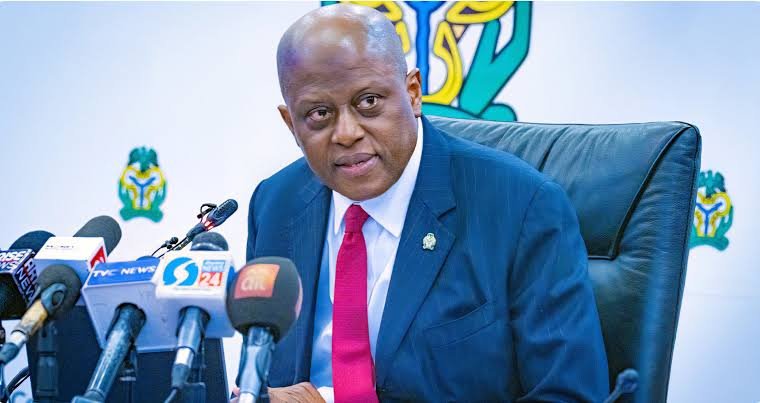
During the engagement, the Minister of Finance and Coordinating Minister of the Economy, Taiwo Oyedele, highlighted Nigeria’s strong GDP growth in dollar terms in 2025, presenting the development as an important signal of improving economic prospects.
The meeting provides another platform for the administration to communicate its economic reform agenda directly to international investors and financial stakeholders.
Tinubu Engages International Investors
President Tinubu’s engagement with global investors reflects the administration’s continued focus on attracting foreign investment.
Furthermore, Nigeria needs substantial private capital to support infrastructure, manufacturing, energy, technology, agriculture, and other productive sectors.
International investors often assess economic stability before committing significant capital.
They examine growth trends.
They consider fiscal policies.
They evaluate monetary conditions.
They also assess the overall business environment.
Nigeria’s ability to demonstrate improving economic fundamentals could therefore strengthen investor interest.
Oyedele Highlights Dollar-Term GDP Growth
Oyedele used the engagement to draw attention to Nigeria’s GDP growth when measured in dollar terms in 2025.
Furthermore, dollar-denominated economic output can provide international investors with another perspective when evaluating the size and performance of an economy.
This measurement matters particularly to foreign investors who operate across multiple currencies.
However, GDP growth in dollar terms represents only one part of the broader economic picture.
Investors also consider inflation, exchange-rate stability, interest rates, productivity, consumer demand, public debt, and policy consistency.
Economic Reforms Remain Central
The Tinubu administration has pursued several reforms aimed at reshaping Nigeria’s economic structure.
Furthermore, the government has sought to improve revenue generation, strengthen fiscal management, attract investment, and create conditions for private-sector growth.
Economic reforms can create short-term challenges.
However, the administration has argued that structural changes are necessary to establish a stronger foundation for long-term growth.
The investor engagement provides an opportunity to explain that strategy to international audiences.
Why Foreign Investment Matters
Foreign investment can provide capital that supports business expansion and infrastructure development.
Furthermore, international investors can bring technology, management expertise, new markets, and additional employment opportunities.
Investment in manufacturing can expand production.
Energy investment can improve supply.
Technology investment can accelerate digital transformation.
Agricultural investment can strengthen food production and processing.
These activities can contribute to wider economic growth.
Nigeria’s Large Market Remains Attractive
Nigeria possesses one of Africa’s largest consumer markets.
Furthermore, its population creates substantial potential demand for financial services, telecommunications, consumer products, healthcare, technology, transportation, and other services.
A growing economy can increase opportunities for companies operating within these sectors.
International investors may therefore view Nigeria’s market size as an important long-term advantage.
However, unlocking that potential requires a more predictable business environment.
Improving the Investment Climate
Investor confidence depends heavily on policy clarity and institutional stability.
Furthermore, businesses need confidence that regulations will remain understandable and investments will receive appropriate protection.
Efficient government processes can reduce operating costs.
Reliable infrastructure can improve productivity.
Transparent regulations can reduce uncertainty.
Access to foreign exchange can also remain important for international businesses.
These factors can influence investment decisions alongside economic growth.
Infrastructure Creates Major Opportunities
Nigeria’s infrastructure needs also create significant investment opportunities.
Furthermore, the country requires continued development across roads, railways, electricity, ports, telecommunications, housing, water infrastructure, and digital systems.
Private-sector participation can complement government spending.
Public-private partnerships can support major projects.
International capital can also help finance infrastructure with long-term economic value.
Energy Sector Remains Critical
The energy sector remains one of Nigeria’s most important areas for investment.
Furthermore, reliable electricity can improve productivity across virtually every part of the economy.
Manufacturers need dependable power.
Technology companies require reliable data infrastructure.
Small businesses need electricity to operate.
Healthcare institutions depend on stable energy supplies.
Greater investment in generation, transmission, distribution, gas infrastructure, and renewable energy could therefore support wider economic activity.
Technology Offers New Growth Opportunities
Nigeria’s technology ecosystem also provides opportunities for international investors.
Furthermore, the country has developed a growing community of technology companies, startups, fintech businesses, digital service providers, and technology professionals.
Investment can help promising companies scale.
Technology can improve financial inclusion.
Digital platforms can expand access to services.
Artificial intelligence can create new business models.
Cloud infrastructure can support digital transformation.
These developments can strengthen Nigeria’s position within the global digital economy.
The Role of Fiscal Management
Oyedele’s presence at the investor engagement also highlights the importance of fiscal management.
Furthermore, international investors closely monitor government revenue, expenditure, borrowing, and debt management.
Stronger public finances can improve investor confidence.
Better revenue collection can reduce excessive borrowing.
Efficient expenditure can create greater value from public resources.
Fiscal discipline can also provide governments with greater capacity to respond to economic shocks.
Growth Must Reach Households
While stronger GDP growth can improve economic prospects, its impact on ordinary Nigerians remains important.
Furthermore, sustainable economic progress should translate into employment, higher productivity, better household incomes, improved infrastructure, and greater access to essential services.
Businesses need to expand.
Workers need productive opportunities.
Entrepreneurs need access to capital.
Households need greater purchasing power.
These outcomes can make economic growth more meaningful for citizens.
Investor Confidence and Policy Continuity
International investors typically consider whether economic reforms can continue over several years.
Furthermore, major investments often require long-term commitments and predictable policy environments.
Consistent implementation can strengthen confidence.
Frequent policy reversals can increase uncertainty.
Clear communication can also help investors understand the government’s direction.
The Tinubu administration therefore faces the challenge of maintaining reform momentum while addressing concerns affecting businesses and households.
France Engagement Strengthens Economic Diplomacy
Tinubu’s meeting with investors in France also demonstrates the role of economic diplomacy in attracting capital.
Furthermore, direct engagement allows the President and senior economic officials to present Nigeria’s investment opportunities while addressing concerns from potential investors.
Such meetings can strengthen relationships.
They can open channels for future investment discussions.
They can also improve international understanding of Nigeria’s economic priorities.
Looking Ahead
President Tinubu’s engagement with global investors in France, alongside Minister Taiwo Oyedele’s emphasis on Nigeria’s GDP growth in dollar terms in 2025, reflects the Federal Government’s continued push to position Nigeria as an attractive destination for international capital.
The administration will need to translate improved economic indicators into stronger investor confidence, greater private-sector activity, increased employment, and tangible improvements in living standards.
Ultimately, Nigeria’s ability to attract and retain global investment will depend not only on GDP growth, but also on policy consistency, exchange-rate stability, infrastructure development, energy reliability, fiscal discipline, regulatory clarity, security, and the government’s capacity to create a business environment where investors can confidently commit capital for the long term.