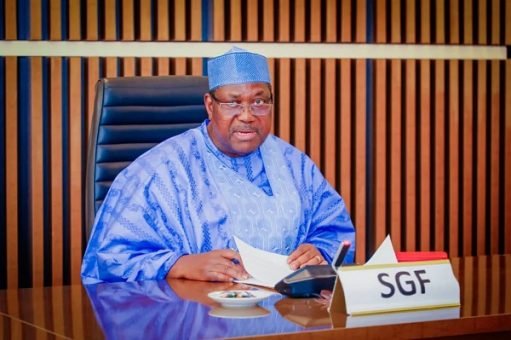
President Bola Ahmed Tinubu has approved the immediate dissolution of the Presidential Implementation Committee on the Alienation of Federal Government Property, bringing an end to a government body that operated for approximately 25 years after its establishment during the administration of former President Olusegun Obasanjo.
The decision forms part of the Federal Government’s broader efforts to strengthen institutional efficiency, improve governance, streamline administrative structures, and ensure that government agencies continue operating in line with current national priorities.
Furthermore, the dissolution reflects the administration’s ongoing review of public institutions, committees, and agencies with the objective of improving coordination, eliminating duplication of responsibilities, enhancing accountability, and promoting more effective service delivery across government.
According to the Presidency, periodic reviews of public institutions remain an important aspect of responsible governance because government structures must continually adapt to changing national needs, economic realities, and administrative priorities.
The latest development also demonstrates President Tinubu’s continued emphasis on institutional reforms aimed at strengthening efficiency throughout the Federal Government.
A Major Institutional Reform
The dissolution represents another significant administrative decision under the Tinubu administration.
Furthermore, reviewing long-standing government structures enables public institutions to remain responsive to contemporary governance requirements.
Institutions must evolve.
Government reforms often seek to improve efficiency while ensuring that available resources are utilised more effectively.
Efficiency strengthens governance.
Reviewing Long-Standing Institutions
The Presidential Implementation Committee on the Alienation of Federal Government Property was established during former President Olusegun Obasanjo’s administration.
Furthermore, after operating for approximately twenty-five years, the committee became part of the broader institutional review undertaken by the current administration.
Periodic reviews improve governance.
According to governance experts, evaluating long-existing institutions ensures they continue serving their intended purposes effectively.
Regular assessment promotes accountability.
Strengthening Government Efficiency
President Tinubu’s administration has repeatedly emphasised the importance of improving institutional performance.
Furthermore, eliminating overlapping responsibilities allows government agencies to function more effectively while reducing unnecessary administrative complexity.
Efficiency creates better outcomes.
The review process also encourages clearer responsibilities among ministries, departments, and agencies.
Clear structures improve coordination.
Promoting Better Resource Management
Government reforms frequently focus on improving resource utilisation.
Furthermore, restructuring institutions can help ensure that public funds, personnel, and administrative resources support national priorities more effectively.
Responsible management benefits citizens.
According to public administration specialists, streamlined institutions often improve decision-making while reducing operational inefficiencies.
Better management encourages productivity.
Institutional Accountability Remains Essential
The administration continues placing emphasis on accountability throughout public institutions.
Furthermore, reviewing existing committees provides opportunities to strengthen transparency while ensuring public bodies remain aligned with established governance objectives.
Accountability builds confidence.
Strong institutions encourage greater public trust while improving service delivery.
Transparent governance strengthens democracy.
Modernising Public Administration
The dissolution also reflects broader efforts to modernise Nigeria’s public administration.
Furthermore, effective governments continually evaluate their institutional frameworks to ensure they remain capable of responding to contemporary challenges.
Modern governance requires adaptability.
Public institutions perform better whenever structures evolve alongside changing national priorities.
Adaptation encourages progress.
Supporting Ongoing Reforms
President Tinubu has consistently pursued reforms across multiple sectors.
Furthermore, institutional restructuring complements ongoing efforts aimed at improving economic management, strengthening governance, encouraging investment, and enhancing public service delivery.
Reforms require consistency.
Supporters argue that reviewing government institutions contributes to building a more responsive and efficient public sector.
Continuous improvement remains important.
Focus on Better Coordination
One objective of institutional reforms involves improving coordination among government agencies.
Furthermore, reducing duplication allows ministries and departments to collaborate more effectively while improving operational performance.
Coordination improves effectiveness.
According to governance analysts, clearly defined responsibilities strengthen institutional productivity while reducing unnecessary bureaucratic delays.
Organisation supports efficiency.
Preparing Government for Future Challenges
The Federal Government continues recognising that future challenges require adaptable institutions.
Furthermore, strengthening administrative structures prepares public agencies to respond more effectively to changing economic, technological, and governance demands.
Future readiness matters.
Institutional flexibility strengthens national resilience while supporting sustainable development.
Prepared institutions serve citizens better.
Looking Ahead
President Bola Ahmed Tinubu’s approval of the immediate dissolution of the Presidential Implementation Committee on the Alienation of Federal Government Properties marks another important step in the administration’s ongoing efforts to strengthen institutional efficiency, modernise governance, and improve public administration.
Furthermore, reviewing and restructuring long-standing government institutions demonstrates a commitment to ensuring that every public body continues operating effectively while supporting current national priorities and development objectives.
As the Federal Government continues implementing broader governance reforms, many observers expect additional efforts aimed at improving accountability, strengthening institutional coordination, eliminating duplication, enhancing operational efficiency, and promoting better service delivery across the public sector. Through consistent institutional evaluation, responsible resource management, transparent governance, and sustained administrative reforms, Nigeria continues building stronger public institutions capable of supporting long-term national development and delivering greater value to citizens.