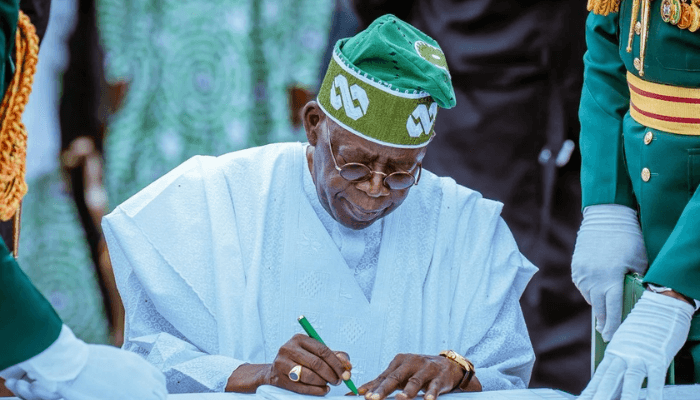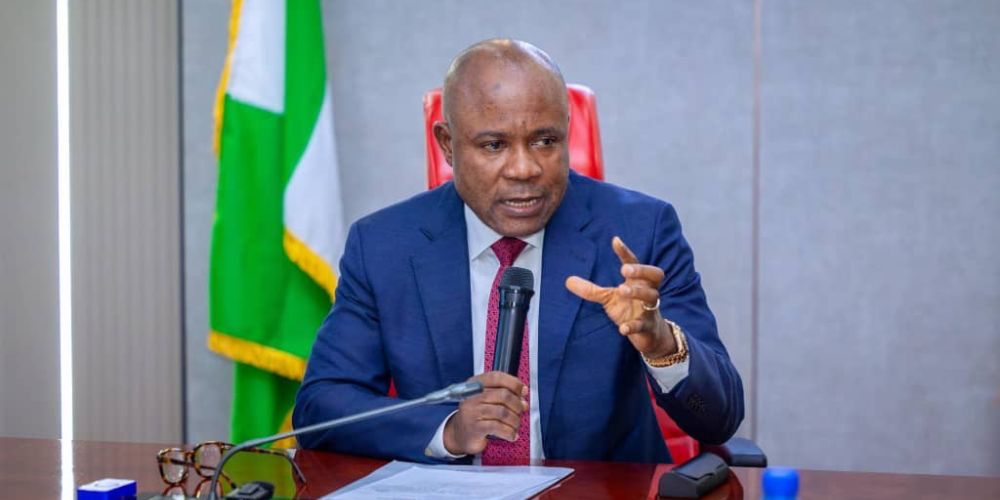
Few leaders willingly embrace policies that risk short-term popularity for long-term national transformation. Yet that is precisely the path President Bola Ahmed Tinubu chose when he launched sweeping economic reforms aimed at restructuring Nigeria’s financial foundations. The decisions sparked fierce debate across the country. Fuel subsidy removal triggered immediate reactions. Exchange-rate reforms generated uncertainty. New fiscal policies attracted criticism from political opponents and concerned citizens alike. However, supporters insist that the controversy surrounding Tinubu’s reforms often overlooks a fundamental question: can a nation achieve lasting prosperity without first confronting the structural problems that have limited growth for decades? While critics emphasize the pain of adjustment, advocates argue that the president is attempting something many leaders avoided—making difficult decisions today to secure a stronger future tomorrow.
The Reform That Changed the National Conversation
From his first days in office, Tinubu signaled that business as usual would no longer define economic policy.
The removal of fuel subsidies immediately transformed national discussions about governance, public spending, and economic priorities. For years, experts had argued that subsidy payments consumed enormous resources while delivering uneven benefits.
Supporters of reform believed the system encouraged inefficiency and drained funds that could support infrastructure, education, healthcare, and economic development.
The policy was never expected to be universally popular.
Yet advocates maintain that leadership is often measured not by the ability to avoid difficult choices but by the willingness to confront them.
For Tinubu’s supporters, the subsidy decision represented political courage rather than political convenience.
Why Critics Remain Unconvinced
The controversy persists because many Nigerians continue to experience economic hardship.
Higher transportation costs, inflationary pressures, and rising living expenses have created genuine concerns among households and businesses.
These concerns deserve recognition.
Every major economic transition creates uncertainty. Citizens naturally evaluate reforms based on their daily experiences rather than long-term projections.
Critics argue that promised benefits have not yet reached enough people. They question whether ordinary Nigerians will ultimately experience meaningful improvements.
Supporters acknowledge these frustrations but insist that temporary hardship should not be confused with policy failure.
They argue that structural reforms often require time before measurable gains become visible across the broader economy.
Building an Economy Beyond Oil Dependence
One of the strongest arguments in favor of Tinubu’s agenda centers on diversification.
Nigeria has long sought to reduce excessive dependence on oil revenue. Economic volatility in global energy markets repeatedly demonstrated the risks of relying too heavily on a single sector.
Supporters believe current reforms are designed to strengthen alternative sources of growth.
Technology, manufacturing, agriculture, financial services, and infrastructure development all stand to benefit from a more stable and competitive economic environment.
Diversification requires investment.
Investment requires confidence.
Confidence requires policy consistency.
Advocates argue that these reforms aim to create exactly that foundation.
The Investor Confidence Factor
International investors often examine more than market size.
They evaluate fiscal discipline, monetary stability, regulatory predictability, and government commitment to reform.
Supporters argue that Tinubu’s policies send important signals to global markets.
The message is that Nigeria intends to address longstanding structural challenges rather than postpone them indefinitely.
This perception can influence capital flows, business expansion decisions, and foreign direct investment opportunities.
While investment alone cannot solve every economic challenge, it remains an important driver of job creation and economic growth.
Advocates therefore view the reform agenda as part of a broader effort to strengthen Nigeria’s competitiveness in an increasingly globalized economy.
Leadership and Political Risk
Another dimension of the controversy involves political calculation.
Many observers recognize that some reforms carry significant political costs.
Leaders seeking immediate popularity often avoid measures that generate short-term discomfort.
Tinubu chose a different path.
Supporters argue that his administration accepted political risk in pursuit of long-term objectives. Whether one agrees with every policy or not, they contend that the willingness to address difficult issues demonstrates a commitment to structural change.
For them, the debate should focus not only on present challenges but also on the alternative.
What would happen if these reforms had never been attempted?
Would delaying difficult decisions have strengthened the economy or merely postponed larger problems?
These questions remain central to the national conversation.
The Road to 2027
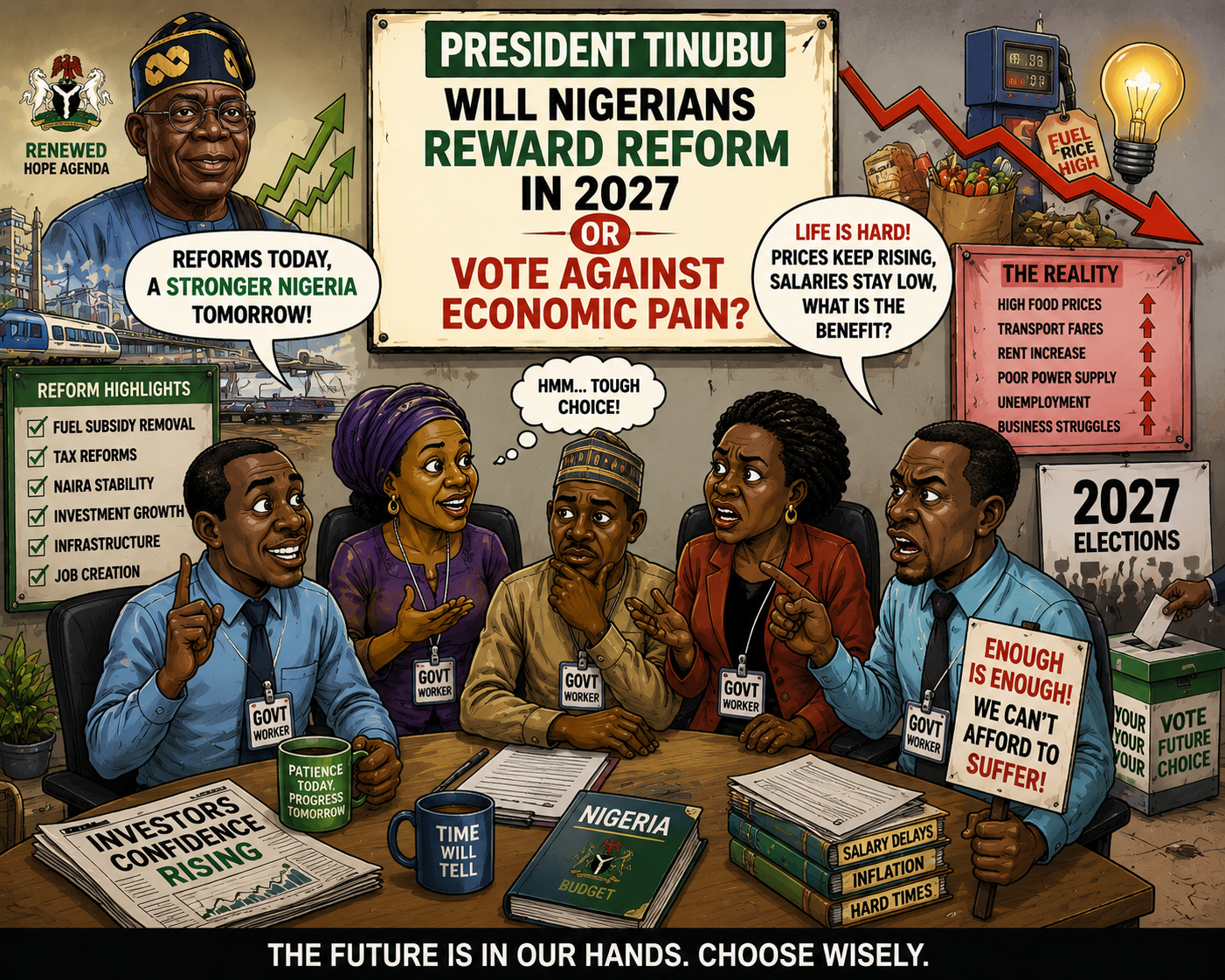
As Nigeria moves closer to another election cycle, the political significance of these reforms will continue to grow.
Opponents will highlight economic pain, inflation, and public frustration. Supporters will point to stabilization efforts, investment opportunities, and long-term economic restructuring.
Both perspectives will compete for public attention.
Ultimately, voters will decide whether the reform agenda delivered sufficient progress to justify its costs.
Yet supporters believe history often judges transformational policies differently from contemporary political debates.
Measures initially criticized sometimes become recognized as necessary turning points.
Looking Beyond the Immediate Debate
The controversy surrounding President Tinubu reflects a broader tension between short-term realities and long-term ambitions.
Economic transformation rarely occurs without disruption. Structural reform rarely emerges without opposition. Significant change rarely arrives without controversy.
Supporters of the president argue that Nigeria faces a defining moment. The nation can continue operating under systems widely criticized as unsustainable, or it can pursue reforms designed to create a stronger foundation for future generations.
The success or failure of that vision will ultimately depend on implementation, economic outcomes, and public confidence. However, one point remains clear: Tinubu’s reform agenda has fundamentally reshaped Nigeria’s economic conversation. Whether celebrated or criticized, it represents one of the most consequential policy experiments in the country’s recent history, and its impact will likely shape national debates for years to come.