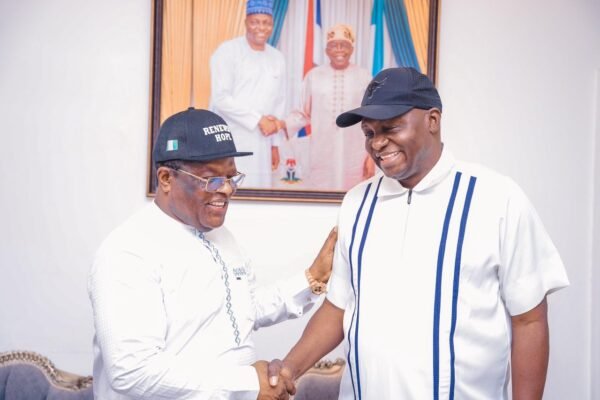
The Minister of Works, David Umahi, has met with the National Chairman of the All Progressives Congress (APC), Nentawe Yilwatda, over plans to present before the party’s National Working Committee the infrastructure achievements of Bola Ahmed Tinubu under the Renewed Hope Agenda.
The meeting reflects ongoing efforts by the ruling party to highlight major infrastructure projects and development initiatives undertaken by the Federal Government across Nigeria. Therefore, discussions surrounding transportation modernization, road construction, and national development remain central to the administration’s policy narrative.
Infrastructure development continues shaping political and economic conversations nationwide.
Focus on the Renewed Hope Agenda
The Renewed Hope Agenda remains the policy framework of the Tinubu administration.
The programme focuses on infrastructure modernization, economic reforms, transportation development, energy expansion, and broader national transformation efforts. Therefore, government officials continue emphasizing projects aimed at improving connectivity and economic productivity.
Development policies influence national planning.
Infrastructure investment frequently supports long-term economic growth and industrial expansion.
National projects shape public perception.
Why Infrastructure Remains a Priority
Infrastructure plays a major role in economic development.
Roads, bridges, rail systems, ports, and public facilities often improve trade, transportation efficiency, and regional connectivity. Therefore, governments frequently prioritize infrastructure projects as part of broader development strategies.
Transportation networks support economic activity.
Efficient logistics systems often strengthen manufacturing, commerce, and investment opportunities.
Connectivity improves competitiveness.
David Umahi’s Role in Infrastructure Development
David Umahi currently oversees major federal road projects as Minister of Works.
Since assuming office, he has regularly provided updates regarding highway construction, rehabilitation programmes, and strategic transportation projects across Nigeria. Therefore, his engagement with APC leadership highlights the political importance of ongoing infrastructure initiatives.
Public works ministries influence development outcomes.
Large transportation projects frequently attract strong public and political attention.
Infrastructure execution affects public confidence.
The APC National Working Committee
The National Working Committee serves as a major leadership structure within the All Progressives Congress.
The committee often oversees party administration, policy coordination, political strategy, and internal organizational activities. Therefore, presentations before the committee may shape how the ruling party communicates government achievements to members and the public.
Political parties rely on structured coordination.
Leadership meetings frequently influence communication strategies and policy engagement.
Political organization supports governance.
Why Governments Showcase Infrastructure Projects
Infrastructure projects often serve as visible indicators of governance performance.
Road construction, transportation upgrades, and public works projects usually attract public attention because citizens directly experience their impact on daily life. Therefore, administrations frequently highlight infrastructure achievements when discussing development progress.
Visible projects influence public perception.
Modern infrastructure often improves mobility, commerce, and access to economic opportunities.
Development projects strengthen national image.
Transportation and Economic Growth
Transportation systems remain essential for national productivity.
Efficient highways and road networks frequently reduce travel time, improve logistics operations, and strengthen regional trade. Therefore, investments in infrastructure may support broader economic growth objectives.
Mobility supports commerce and industry.
Strong transportation systems often attract investment and improve competitiveness.
Infrastructure connects economies.
Political Significance of Infrastructure Development
Infrastructure achievements frequently become important political discussion points.
Political parties often highlight development projects to demonstrate governance capacity and policy implementation effectiveness. Therefore, the planned presentation before the APC leadership may form part of broader political engagement efforts ahead of future electoral activities.
Development influences political narratives.
Citizens often assess governments based partly on visible infrastructure improvements.
Public expectations remain high.
The Role of the Renewed Hope Agenda in Governance
The Renewed Hope Agenda continues shaping government priorities.
Authorities have repeatedly emphasized projects involving roads, railways, energy systems, education, healthcare, and economic reforms as part of broader national development objectives. Therefore, infrastructure modernization remains central to the administration’s public messaging.
Policy direction influences implementation focus.
Long-term planning often shapes infrastructure investment strategies nationwide.
Governance requires sustained execution.
Public Interest in National Infrastructure Projects
Major infrastructure projects continue attracting public attention across Nigeria.
Citizens, business leaders, economists, and transportation stakeholders frequently monitor project timelines, funding structures, and economic impact. Therefore, discussions involving infrastructure achievements often generate strong national interest.
Infrastructure affects daily economic activity.
Road quality and transportation efficiency frequently influence business productivity and mobility.
Public accountability remains important.
Looking Ahead
The planned presentation before the APC National Working Committee is expected to highlight key transportation and infrastructure projects under the Tinubu administration.
Observers will likely continue monitoring how infrastructure development shapes both economic discussions and political narratives nationwide.
Development remains central to national priorities.
Conclusion: Infrastructure at the Centre of National Development Discussions
The meeting between David Umahi and Nentawe Yilwatda underscores the growing importance of infrastructure achievements within the political and development agenda of the administration of Bola Ahmed Tinubu.
As the Federal Government continues emphasizing transportation modernization and national connectivity under the Renewed Hope Agenda, infrastructure projects are expected to remain central to conversations surrounding governance, economic growth, and public development across Nigeria.