The Federal Government has been urged to deliberately engage Nigerian welders and other indigenous technical professionals in the execution of the Ajaokuta-Kaduna-Kano (AKK) gas pipeline project and other projects being undertaken by the Nigerian National Petroleum Company Limited (NNPC Ltd).
The call reflects growing concerns about the need to ensure that major investments in Nigeria’s oil and gas infrastructure translate into meaningful employment, skills development, technology transfer, and business opportunities for local professionals.
Stakeholders argue that projects funded or supported by the Nigerian government should provide stronger opportunities for qualified Nigerians, particularly in technical fields where domestic professionals already possess relevant experience.
AKK Project Offers Local Opportunities
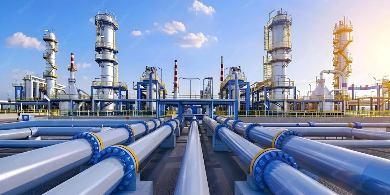
The AKK gas pipeline remains one of Nigeria’s major gas infrastructure projects, with the potential to support industrial development and improve gas distribution across the country.
Furthermore, the project requires several specialised technical services, including welding, fabrication, engineering, construction, inspection, maintenance, logistics, and other activities that can provide opportunities for Nigerian workers and businesses.
Local welders could participate in different stages of construction where their qualifications and technical capabilities meet project requirements.
Such participation could also allow experienced Nigerian professionals to work alongside international contractors and acquire additional knowledge through practical engagement.
Need to Prioritise Indigenous Technical Skills
The call for greater participation comes amid broader efforts to strengthen local content in Nigeria’s petroleum industry.
Furthermore, local-content policies are designed to increase Nigerian participation in the ownership, management, execution, and provision of goods and services within the oil and gas value chain.
Welding remains particularly important because pipelines, processing facilities, storage systems, and other energy infrastructure require highly specialised welding and fabrication work.
Engaging qualified local welders could therefore contribute to both project delivery and workforce development.
Creating Jobs Through Energy Projects
Major infrastructure investments can create employment opportunities beyond permanent positions within government agencies and large corporations.
Furthermore, contractors and subcontractors can employ skilled workers for specific stages of construction, thereby allowing large projects to generate income for communities and technical professionals.
Welders can support pipeline construction.
Fabricators can work on related infrastructure.
Inspectors can provide quality assurance.
Engineers and technicians can supervise technical operations.
This wider employment ecosystem can increase the economic impact of major energy investments.
Skills Development and Technology Transfer
Local participation can also facilitate technology transfer.
Furthermore, Nigerian professionals working directly on complex projects can gain practical exposure to international standards, modern equipment, advanced welding techniques, quality-control procedures, and sophisticated project-management systems.
That experience can strengthen domestic technical capacity.
It can also help Nigerian companies become more competitive in future energy projects.
Over time, experienced workers could transfer their knowledge to younger professionals entering the industry.
Ensuring Quality and Safety
Engaging local welders should, however, remain subject to appropriate technical and safety requirements.
Furthermore, pipeline and energy infrastructure require strict standards because poor welding can create serious operational and environmental risks.
Workers should possess the necessary certifications.
Contractors should conduct proper competency assessments.
Welding activities should undergo appropriate inspection.
Safety requirements should remain non-negotiable.
The objective should therefore be to increase opportunities for qualified Nigerian welders without compromising project quality or safety.
NNPC Projects Can Expand Local Participation
Beyond the AKK project, stakeholders are also calling for greater involvement of local welders in other NNPC-related developments.
Furthermore, Nigeria continues to pursue investments across gas processing, pipelines, refining, upstream production, and other areas of the petroleum value chain.
Each project creates potential demand for technical workers.
A coordinated approach could help ensure that local professionals are identified and considered when suitable opportunities arise.
Strengthening Indigenous Companies
Greater participation by local welders could also support Nigerian-owned technical companies.
Furthermore, indigenous firms require opportunities to demonstrate their capabilities and build track records on major projects.
Contracts can help companies expand.
Project experience can improve credibility.
Higher demand can support investment in equipment and training.
Stronger local businesses can subsequently compete for larger contracts within Nigeria and internationally.
Government Procurement Can Make a Difference
The Federal Government can influence local participation through procurement policies, contractual requirements, monitoring, and enforcement.
Furthermore, project developers and contractors can be required to demonstrate how they intend to meet local-content obligations while maintaining internationally recognised standards.
Effective monitoring can prevent local participation from becoming merely a contractual requirement on paper.
Regular reporting can demonstrate actual employment.
Independent verification can strengthen accountability.
These measures could help ensure that Nigerian workers genuinely benefit from major public and private-sector energy investments.
Preparing Younger Welders
The demand for skilled welders could also provide an opportunity to encourage more young Nigerians to pursue technical careers.
Furthermore, training institutions, industry associations, government agencies, and energy companies could collaborate to provide apprenticeships, certification programmes, practical training, and mentorship.
Young workers could develop specialised skills.
Experienced professionals could serve as mentors.
Companies could build stronger talent pipelines.
Such efforts would help address future technical workforce shortages.
Looking Ahead
The call for the Federal Government to engage local welders in the AKK gas pipeline and other NNPC projects highlights the importance of ensuring that Nigeria’s energy investments generate broad domestic benefits.
The country possesses a large pool of technical professionals, but sustained opportunities are necessary for those skills to develop and translate into stronger indigenous capacity.
Ultimately, greater engagement of qualified Nigerian welders in major NNPC and gas infrastructure projects could create jobs, strengthen local companies, promote technology transfer, develop technical skills, and ensure that more of the economic value generated by Nigeria’s energy investments remains within the country.