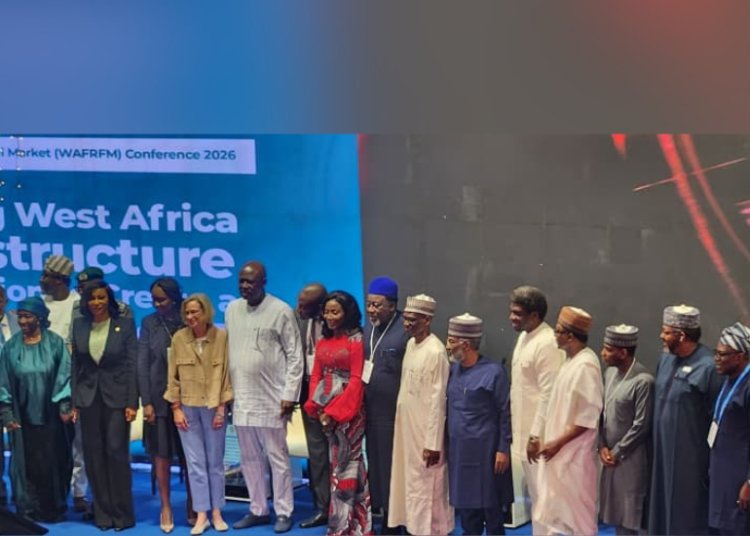
The Minister of State for Petroleum Resources (Oil), Senator Heineken Lokpobiri, has renewed calls for fresh investment in Nigeria’s midstream and downstream oil sector, saying the country’s local refining capacity still trails market demand despite recent gains in domestic refining.
Lokpobiri’s position highlights the continuing need for investment across Nigeria’s petroleum value chain as the Federal Government seeks to strengthen energy security, reduce dependence on imported refined products, and create a more competitive domestic petroleum market.
Although recent developments have increased Nigeria’s refining potential, the minister’s remarks suggest that existing and emerging capacity may still be insufficient to completely satisfy the country’s growing demand for refined petroleum products.
Refining Capacity Remains a Major Concern
Nigeria has historically struggled with inadequate domestic refining capacity despite its position as one of Africa’s major crude oil producers.
Furthermore, prolonged challenges affecting state-owned refineries contributed to the country’s dependence on imported refined petroleum products, exposing consumers and the wider economy to international market movements, foreign exchange pressures, and supply disruptions.
The recent revival of some refining operations has changed the outlook.
However, Lokpobiri maintains that the country still needs additional capacity to close the gap between domestic production and market requirements.
Fresh Investment Needed
The minister’s renewed call for investment is particularly focused on the midstream and downstream segments of the petroleum industry.
Furthermore, investment in these areas can support refineries, petroleum storage, transportation infrastructure, processing facilities, pipelines, terminals, and distribution networks required to move petroleum products efficiently across the country.
More investment can expand refining capacity.
It can improve supply reliability.
It can create additional employment.
It can also strengthen Nigeria’s position within the regional petroleum market.
Recent Refining Gains
Nigeria has recorded developments in domestic refining that have increased optimism about the future of the sector.
Furthermore, the return of refining activities at major facilities, alongside the emergence of privately operated refineries, has demonstrated that domestic processing can play a greater role in meeting national demand.
These developments can reduce pressure on imports.
They can support domestic crude processing.
They can improve supply security.
However, expanding capacity remains important if Nigeria is to consistently produce enough refined products for its large domestic market.
Demand Continues to Drive Pressure
Nigeria’s large population and expanding economic activities continue to generate significant demand for petroleum products.
Furthermore, petrol, diesel, aviation fuel, and other refined products remain important to transportation, businesses, industries, agriculture, logistics, and household activities.
Growing demand therefore requires corresponding investment in production and distribution capacity.
Without sufficient refining capacity, Nigeria could continue facing periods where domestic output falls below consumption requirements.
Midstream Infrastructure Also Matters
Refineries alone cannot guarantee an efficient petroleum market.
Furthermore, Nigeria needs reliable infrastructure for transporting crude oil to processing facilities and moving refined products from refineries to markets.
Pipelines, storage terminals, depots, marine transportation, and distribution networks all play important roles in ensuring that petroleum products reach consumers.
Weak infrastructure can increase costs.
Pipeline challenges can disrupt supplies.
Insufficient storage can create logistical pressure.
Greater investment across the midstream therefore remains essential to complement new refining capacity.
Downstream Market Needs Greater Efficiency
The downstream sector also requires investment to improve distribution and market efficiency.
Furthermore, petroleum products must move efficiently from refineries and import terminals to depots, filling stations, industrial users, and other consumers across the country.
Efficient logistics can reduce unnecessary costs.
Better infrastructure can improve availability.
Competitive markets can encourage service improvements.
Investment can therefore strengthen the entire downstream petroleum system rather than focusing only on refinery construction.
Energy Security Remains a Priority
Increasing domestic refining capacity is closely connected to Nigeria’s broader energy-security objectives.
Furthermore, producing more refined products locally can reduce the country’s exposure to international supply disruptions and fluctuations in global petroleum markets.
Domestic refining can also reduce dependence on foreign exchange for product imports.
It can strengthen supply predictability.
It can support industrial activity.
These benefits make investment in refining and related infrastructure strategically important.
Opportunities for Investors
Lokpobiri’s call also signals the Federal Government’s desire to attract more private capital into the petroleum sector.
Furthermore, investors may find opportunities across refinery development, modular refining, gas processing, storage, transportation, pipelines, terminals, and other petroleum infrastructure.
Nigeria’s large domestic market provides substantial demand.
Regional markets could also create export opportunities for surplus refined products.
However, investors will require clear regulations, stable policies, reliable infrastructure, and commercially viable projects.
Need for Long-Term Planning
Expanding refining capacity requires more than building additional facilities.
Furthermore, Nigeria must ensure adequate crude supply, reliable power, efficient transportation, technical expertise, financing, and maintenance systems to keep refineries operating sustainably.
Operational reliability will be particularly important because installed capacity does not automatically translate into consistent production.
Refineries need regular maintenance.
Crude supply must remain reliable.
Infrastructure must support continuous operations.
Looking Ahead
Lokpobiri’s renewed call for investment underscores the fact that Nigeria’s recent refining gains have not eliminated the country’s petroleum supply challenges.
The expansion of domestic refining provides an opportunity to reduce imports and strengthen energy security, but additional investment will be required to ensure that refining capacity keeps pace with demand.
The country will also need stronger midstream infrastructure and a more efficient downstream distribution network to maximise the benefits of increased domestic production.
Ultimately, Nigeria’s ability to achieve lasting energy security will depend not only on restoring existing refineries but also on attracting sustained investment into new refining capacity, crude transportation, storage, processing, and distribution infrastructure across the midstream and downstream petroleum sectors.