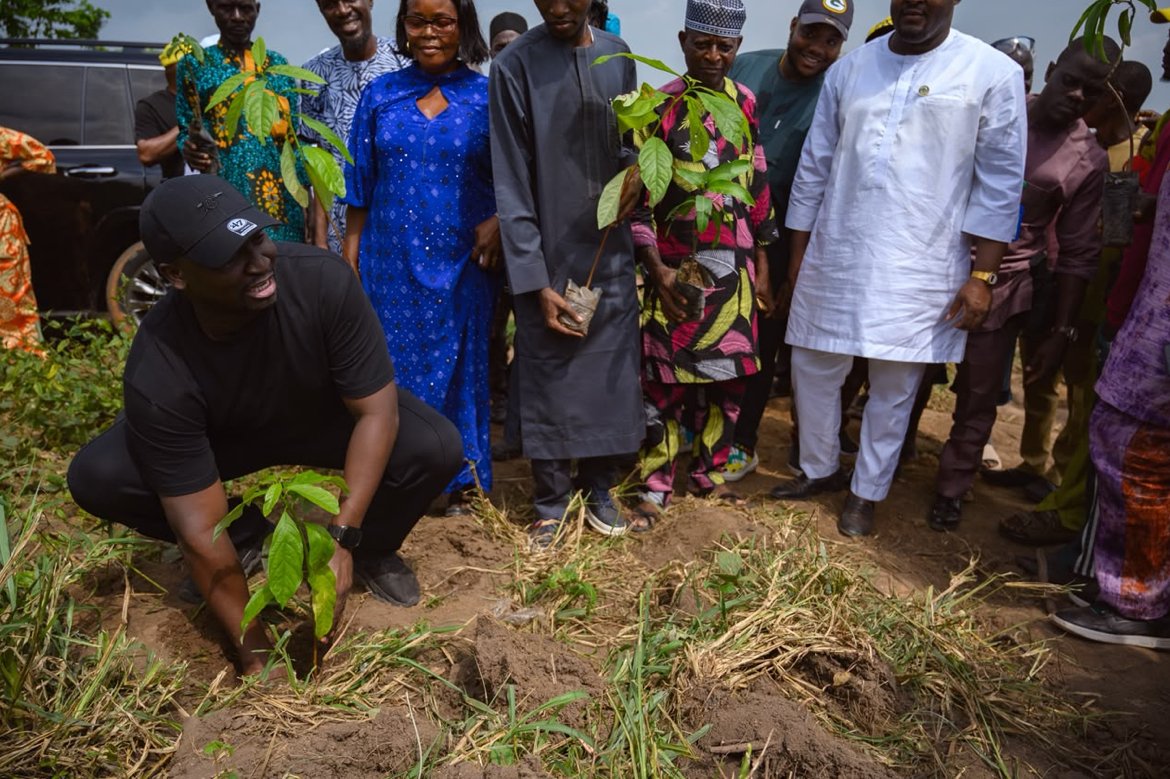
The National Agricultural Land Development Authority (NALDA) is set to plant one million mango, coconut, avocado, and fig trees as part of efforts to strengthen Nigeria’s food security and address growing concerns over food availability and agricultural sustainability.
The initiative is expected to support fruit production while encouraging the development of long-term agricultural assets that can provide food, employment, and income opportunities for farming communities.
The planned tree-planting programme comes amid continuing efforts by the Federal Government and agricultural agencies to increase domestic food production and reduce vulnerabilities within Nigeria’s food supply chain.
NALDA Targets Greater Food Production
Fruit trees can contribute significantly to food security because they provide food over extended production cycles once they reach maturity.
Furthermore, mango, coconut, avocado, and fig trees can provide farmers with products that serve both household consumption and commercial markets.
Higher domestic production can improve food availability.
Farmers can gain additional income sources.
Local markets can receive more agricultural products.
The initiative could therefore contribute to both food production and rural economic development.
Long-Term Agricultural Investment
Unlike many seasonal crops, fruit trees can continue producing for several years after reaching maturity.
Furthermore, establishing large numbers of productive trees can create a long-term agricultural resource for communities and future generations.
Properly managed orchards can generate recurring harvests.
Farmers can develop sustainable income streams.
Agricultural land can remain productive over longer periods.
However, achieving these benefits will require appropriate planting methods, irrigation, soil management, pest control, and continuous maintenance.
Addressing Food Security Concerns
Nigeria continues to face challenges involving food prices, agricultural productivity, climate pressures, transportation costs, and access to farming inputs.
Furthermore, increasing domestic food production remains important as the country seeks to reduce pressure on food imports and strengthen the resilience of its agricultural system.
Tree crops can complement the production of grains, vegetables, tubers, livestock, and other food commodities.
A diversified agricultural system can reduce dependence on individual crops while creating multiple sources of food and income.
Mango Production Could Expand
Mango is widely consumed in Nigeria and has significant potential for commercial production.
Furthermore, increased mango cultivation could create opportunities for fresh fruit markets and agro-processing industries.
Mangoes can be sold locally.
They can also support juice and other processed products.
Farmers can potentially benefit from higher-value markets when production, storage, and processing systems are properly developed.
Expanding mango cultivation could therefore contribute to both food availability and agricultural value creation.
Coconut Offers Multiple Opportunities
Coconut also has significant economic potential because different parts of the crop can be used for food and industrial purposes.
Furthermore, coconut can support activities involving oil, water, milk, fibre, cosmetics, and other products.
Increasing coconut cultivation could therefore create opportunities beyond fresh food production.
It could support small-scale processing.
It could encourage agro-industrial investment.
It could also create additional income opportunities for rural communities.
Avocado Has Growing Market Potential
Avocado has become increasingly important in domestic and international food markets because of its nutritional and commercial value.
Furthermore, expanding local production could help Nigeria take advantage of opportunities in fresh fruit markets and agricultural processing.
Increased cultivation could improve availability.
Farmers could gain access to higher-value markets.
Processing could create additional economic opportunities.
However, farmers would need technical knowledge to manage production effectively and maintain quality standards.
Fig Cultivation Adds Crop Diversity
The inclusion of figs in the programme could also broaden Nigeria’s fruit production base.
Furthermore, expanding the range of commercially cultivated fruits can reduce reliance on a limited number of agricultural products while creating opportunities for new markets.
Crop diversity can strengthen agricultural resilience.
It can create new income opportunities.
It can also encourage farmers to explore alternative commercial crops.
Employment and Rural Development
The tree-planting programme could generate employment throughout the agricultural value chain.
Furthermore, opportunities can emerge in nursery management, land preparation, planting, irrigation, farm maintenance, harvesting, transportation, processing, packaging, and marketing.
Young people could benefit from agricultural employment.
Women can participate in processing and marketing activities.
Rural enterprises can develop around fruit production.
These opportunities could strengthen local economies while supporting national food-security objectives.
Need for Proper Maintenance
Planting one million trees is an ambitious target, but the long-term success of the initiative will depend on what happens after planting.
Furthermore, young trees require water, nutrients, protection from pests, weed control, and appropriate agricultural management before they become productive.
Survival rates will therefore be important.
Farmers will need technical support.
Monitoring will be necessary.
Long-term maintenance plans can determine whether the programme delivers its intended impact.
Supporting Agro-Processing
Increased fruit production could also create opportunities for Nigeria’s agro-processing sector.
Furthermore, processing can help reduce post-harvest losses by converting excess fresh produce into products with longer shelf lives.
Mangoes can be processed into juice and other products.
Coconut can support oil and fibre production.
Avocado can enter food and cosmetic value chains.
Figs can support fresh and processed markets.
Developing these value chains could increase the economic value generated from the trees.
Looking Ahead
NALDA’s plan to plant one million mango, coconut, avocado, and fig trees represents an effort to combine immediate food-security concerns with long-term agricultural development.
The initiative could contribute to greater fruit availability, rural employment, farmer income, agro-processing, and diversification of Nigeria’s agricultural production.
However, the success of the programme will depend on effective implementation, suitable planting locations, farmer participation, access to irrigation, technical support, monitoring, and long-term maintenance.
Ultimately, the one-million-tree programme could become an important component of Nigeria’s food-security strategy if the planted trees are properly maintained and integrated into productive agricultural value chains capable of supplying food, creating jobs, supporting farmers, and generating sustainable economic opportunities for years to come.