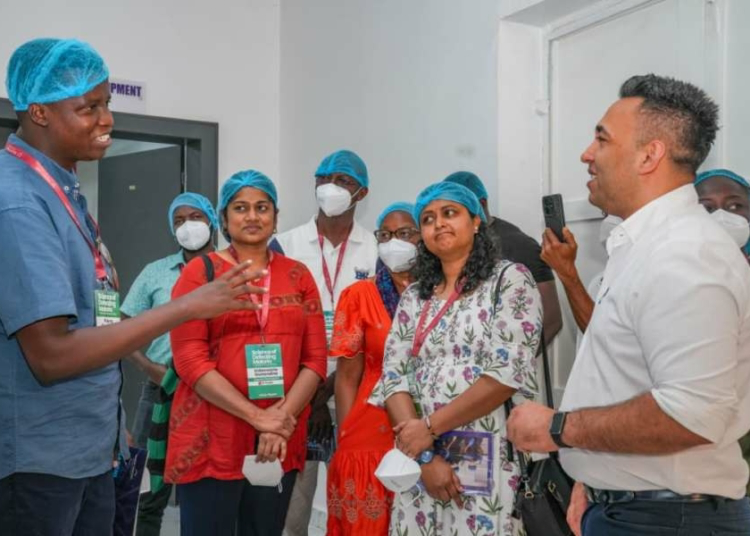
A delegation of about 85 global health professionals, scientists, and policymakers from Harvard University has praised the establishment of the NASENI-TROMENT Biotechnologies Factory, describing it as a major milestone in Nigeria’s efforts to combat malaria and other infectious diseases.
The delegation noted that the facility represents a forward-looking investment in healthcare innovation and biotechnology, with the potential to transform disease prevention, research, and local manufacturing across Nigeria and the African continent.
Their commendation highlights the growing international recognition of Nigeria’s efforts to strengthen scientific research and expand domestic capacity in healthcare technology.
A Strategic Weapon Against Malaria
The Harvard delegation described the biotechnology factory as a critical platform for advancing solutions to one of Africa’s biggest public health challenges. Malaria continues to claim thousands of lives annually while placing enormous pressure on healthcare systems and economic productivity across the continent.
According to the experts, strengthening local biotechnology production can improve access to innovative healthcare products, support disease surveillance, and accelerate research aimed at reducing the burden of infectious diseases.
They emphasized that investments in biotechnology remain essential for achieving long-term public health security and sustainable development.
Advancing Local Innovation and Research
The NASENI-TROMENT Biotechnologies Factory is expected to promote indigenous scientific research and encourage collaboration between Nigerian and international experts in biotechnology and healthcare innovation.
The delegation observed that expanding local production capabilities will reduce dependence on imported medical technologies while creating opportunities for knowledge exchange, technology transfer, and scientific advancement.
Furthermore, they noted that strengthening domestic research institutions will enable African countries to develop solutions that address the continent’s unique healthcare challenges.
Supporting Economic Growth and Job Creation
Beyond its healthcare impact, the biotechnology facility is expected to contribute to economic development by creating skilled jobs, supporting local industries, and encouraging investment in science and technology.
The factory is also expected to provide opportunities for researchers, engineers, laboratory professionals, and young innovators to contribute to the growth of Nigeria’s biotechnology sector while strengthening the country’s knowledge economy.
Experts believe such investments can position Nigeria as a regional hub for biotechnology manufacturing and medical innovation.
A Shared Vision for Africa’s Health Future
The visiting delegation stressed that collaboration between governments, research institutions, universities, and private sector organizations remains essential for addressing infectious diseases that continue to affect millions of people across Africa.
They encouraged continued investment in biotechnology infrastructure, scientific education, and healthcare innovation as critical tools for improving public health outcomes and enhancing regional resilience against future disease outbreaks.
A New Chapter for Healthcare Innovation
The commendation from the Harvard delegation underscores the international significance of the NASENI-TROMENT Biotechnologies Factory and its potential contribution to healthcare transformation in Nigeria and beyond.
As the country continues to invest in science, engineering, and biotechnology, projects such as this are expected to strengthen local manufacturing, promote research excellence, and accelerate efforts to combat malaria and other infectious diseases while supporting broader economic and technological development across Africa.