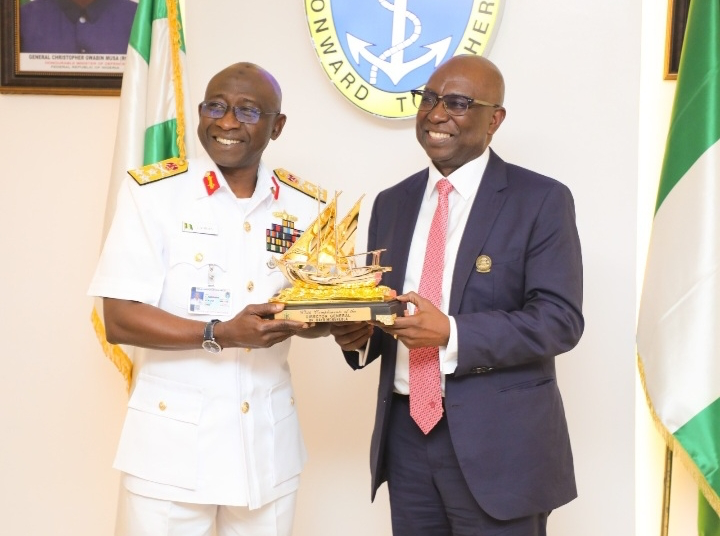
As part of ongoing efforts to improve maritime safety and navigation in Nigeria, the Nigerian Maritime Administration and Safety Agency (NIMASA) has announced plans to collaborate with the National Hydrographic Agency to promote the use and patronage of locally developed nautical charts and other hydrographic communication tools.
The partnership is expected to strengthen navigational safety within Nigeria’s territorial waters while supporting the development of indigenous maritime capabilities and reducing reliance on foreign hydrographic products.
Officials believe that greater utilization of locally produced nautical charts will improve access to accurate maritime information and contribute to safer navigation for vessels operating within Nigerian waters.
Why Nautical Charts Matter
Nautical charts remain among the most important tools used in maritime navigation.
They provide critical information about waterways, including water depths, coastlines, navigation routes, underwater hazards, port locations, and other essential details required for safe vessel movement.
Mariners rely on these charts to make informed decisions while navigating through territorial waters, ports, channels, and coastal environments.
Accurate hydrographic information helps reduce the risk of accidents, groundings, collisions, and other navigational incidents that could threaten lives, cargo, and marine ecosystems.
Consequently, maintaining reliable nautical charts is a fundamental component of maritime safety management.
Promoting Indigenous Capacity
The collaboration reflects broader efforts to strengthen local capacity within Nigeria’s maritime sector.
Developing and utilizing indigenous hydrographic products enables the country to build technical expertise while ensuring that navigational information reflects local realities and evolving maritime conditions.
Locally produced charts can often be updated more efficiently to account for environmental changes, infrastructure developments, dredging activities, and other factors affecting navigation.
Officials believe that increased patronage of Nigerian hydrographic products will encourage further investment in research, mapping, and maritime data collection.
Such investments contribute to long-term sectoral growth and self-sufficiency.
Enhancing Maritime Safety
Maritime safety remains a top priority for both agencies.
Nigeria’s waterways support extensive commercial activities, including shipping, fishing, offshore energy operations, and coastal transportation.
Ensuring safe navigation is therefore essential for protecting lives, facilitating trade, and supporting economic development.
Improved access to accurate hydrographic information helps vessel operators navigate more safely while enhancing operational efficiency.
The collaboration between NIMASA and the National Hydrographic Agency is expected to strengthen safety standards and reinforce efforts aimed at reducing maritime risks.
Supporting the Blue Economy
Nigeria has increasingly emphasized the development of its blue economy as part of broader economic diversification efforts.
The blue economy encompasses shipping, maritime trade, fisheries, marine resources, coastal tourism, offshore energy, and other ocean-based industries.
Reliable hydrographic data plays a critical role in unlocking these opportunities.
Accurate mapping and navigational information support investment decisions, infrastructure development, resource management, and maritime operations.
By strengthening hydrographic capabilities, Nigeria can improve the foundation upon which sustainable blue economy growth depends.
Technology and Modern Navigation
The maritime industry continues to experience rapid technological transformation.
Digital navigation systems, electronic charts, satellite positioning technologies, and advanced communication platforms increasingly shape modern maritime operations.
Hydrographic information remains central to these innovations.
Modern nautical charts often integrate with electronic navigation systems, providing mariners with real-time situational awareness and enhanced decision-making capabilities.
The partnership between the two agencies is expected to explore ways of maximizing these technological opportunities while promoting locally generated solutions.
Reducing Dependence on Foreign Products
One of the strategic benefits of developing indigenous nautical charts is the potential reduction in dependence on foreign hydrographic products.
While international resources remain important, strengthening domestic production enhances national capacity and promotes greater control over maritime information resources.
Local expertise can improve responsiveness to emerging navigational needs while creating opportunities for knowledge transfer, skills development, and professional growth within the maritime sector.
This aligns with broader national objectives aimed at promoting local content and strengthening critical industries.
Economic Benefits of Improved Hydrography
Beyond safety considerations, hydrographic development can generate significant economic benefits.
Efficient navigation supports smoother shipping operations, reduces transportation risks, and enhances the competitiveness of ports and maritime services.
Improved maritime infrastructure and navigational confidence often encourage greater commercial activity and investment.
As Nigeria seeks to position itself as a leading maritime hub in West Africa, reliable hydrographic services will remain an important component of its competitive advantage.
The collaboration is therefore expected to contribute to both safety and economic development objectives.
Looking Ahead
The planned partnership between the Nigerian Maritime Administration and Safety Agency and the National Hydrographic Agency underscores Nigeria’s commitment to strengthening maritime safety, enhancing navigational efficiency, and promoting indigenous hydrographic solutions.
By encouraging greater use of locally developed nautical charts and communication tools, the initiative aims to improve maritime operations while supporting capacity development within the sector.
As Nigeria continues advancing its maritime and blue economy ambitions, investments in hydrographic infrastructure, technology, and local expertise are expected to play an increasingly important role in ensuring safer waters and stronger economic opportunities across the nation’s maritime domain.