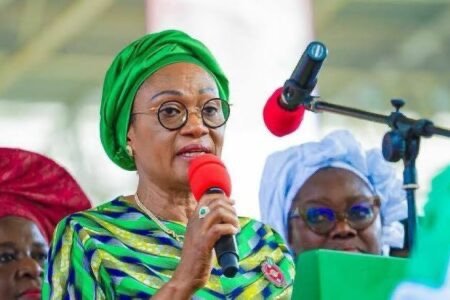
Oluremi Tinubu occupies a unique position in Nigeria’s public life. As First Lady, her role extends beyond ceremony. It carries expectations of advocacy, influence, and measurable social impact.
In recent years, her visibility has increased significantly. Her engagements span education, health, women’s empowerment, and community development. However, visibility alone does not define legacy. Impact does.
From Legislative Experience to National Platform
Before becoming First Lady, Oluremi Tinubu built a career in the Senate. That background matters.
It provides her with an understanding of policy, governance, and legislative processes. Therefore, she is not new to public service.
This experience gives her an advantage. She can navigate institutional systems more effectively than many predecessors.
However, it also raises expectations. Nigerians expect results, not symbolism.
Advocacy That Must Translate to Outcomes
Her advocacy has consistently focused on women and vulnerable groups. She promotes education, health access, and social welfare.
These priorities align with national needs. Nigeria continues to face challenges in literacy, healthcare access, and gender inequality.
Therefore, her focus areas are relevant.
Yet, relevance must lead to results. Programmes must move beyond announcements. They must deliver measurable outcomes.
For example, initiatives should show clear data: number of beneficiaries, long-term impact, and sustainability.
Without this, even well-intentioned efforts risk fading into routine public messaging.
Balancing Influence and Accountability
The office of the First Lady carries influence but limited constitutional power.
This creates a delicate balance.
Oluremi Tinubu must use soft power effectively. She must influence policy indirectly while maintaining public trust.
Transparency becomes essential. Nigerians increasingly demand accountability from all public figures.
Therefore, her initiatives must remain open to scrutiny.
Clear communication, consistent reporting, and stakeholder engagement will strengthen credibility.
A Symbol of Women’s Leadership
Despite the challenges, her role carries symbolic weight.
She represents women in leadership at the highest level.
This visibility matters. It inspires participation and ambition among young women.
Moreover, it reinforces the importance of gender inclusion in governance.
However, symbolism alone cannot sustain influence. It must connect with real opportunities for women.
Skills programmes, access to finance, and leadership training must follow.
Opportunities for Lasting Legacy
Oluremi Tinubu has a clear opportunity to define a lasting legacy.
She can champion large-scale, high-impact initiatives that endure beyond her tenure.
For instance, education-focused programmes can transform communities over time.
Healthcare interventions can improve national outcomes if properly scaled.
In addition, partnerships with private sector and international organisations can amplify impact.
Strategic collaboration often determines success.
The Road Ahead
The coming years will shape how history remembers her.
Consistency will matter. Execution will matter even more.
Nigerians will look beyond speeches. They will assess results.
Therefore, focus must remain on delivery, not just intention.
Conclusion: Leadership Beyond Titles
Oluremi Tinubu stands at a defining moment.
She has influence, experience, and national visibility. These are powerful tools.
However, tools only matter when used effectively.
Her legacy will depend on one question: did her leadership change lives in measurable ways?
If the answer becomes yes, then her tenure will stand as a model of purposeful leadership.
If not, it will remain a story of potential unfulfilled.
The choice, ultimately, lies in execution.