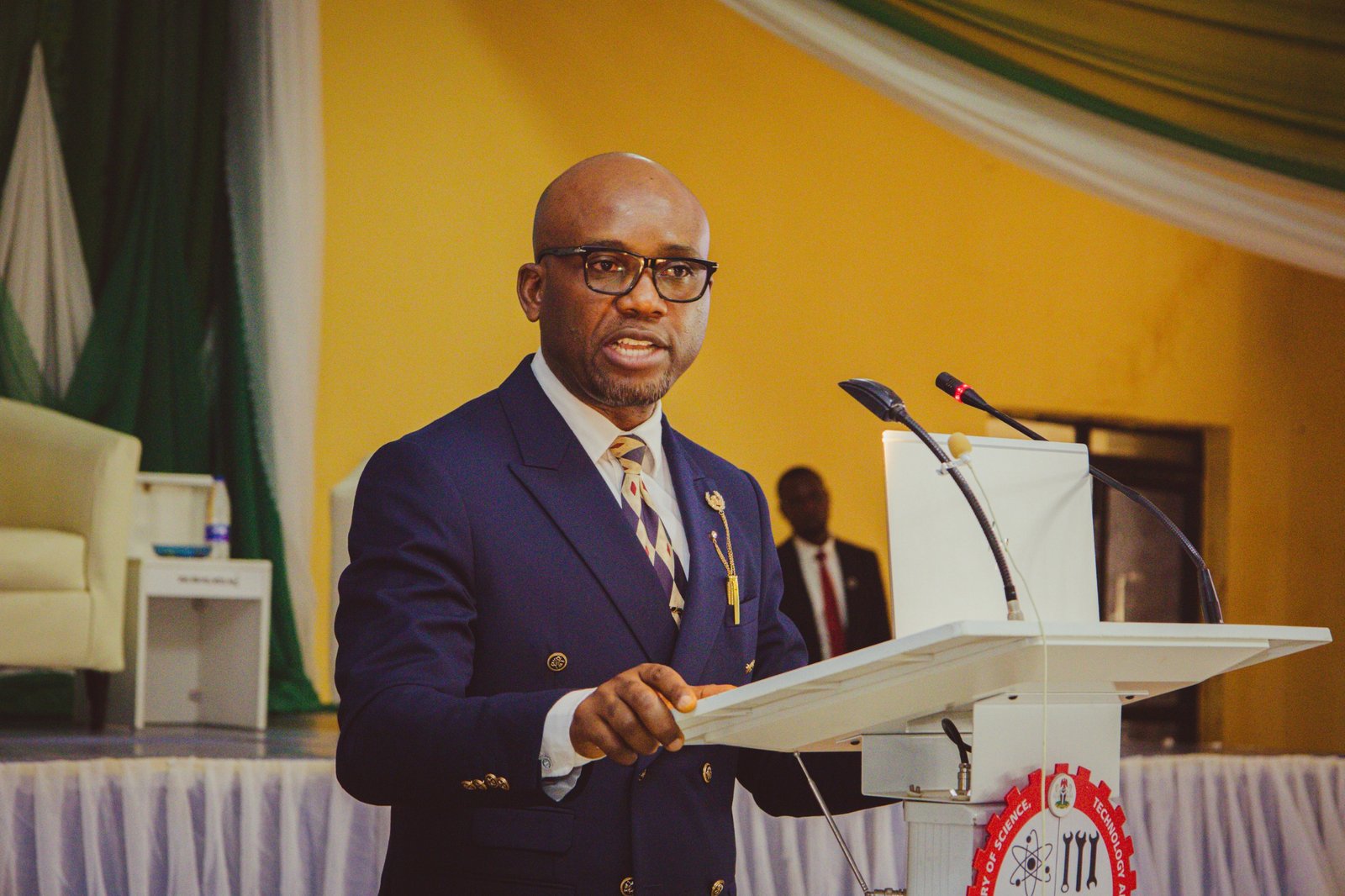
The Minister of Works, Engr. David Umahi, has stated that the Federal Government’s extensive investment in road infrastructure under the administration of President Bola Ahmed Tinubu is creating thousands of jobs, stimulating economic activity, improving connectivity, and contributing to efforts aimed at reducing hunger across Nigeria.
Umahi explained that the ongoing road construction and rehabilitation projects extend beyond improving transportation, stressing that they also serve as powerful economic drivers by generating employment opportunities, supporting local businesses, increasing demand for construction materials, and expanding commercial activities across different regions of the country.
Furthermore, the minister noted that improved road infrastructure strengthens agricultural supply chains by enabling farmers to transport produce more efficiently to markets, reducing post-harvest losses and improving food distribution nationwide.
According to Umahi, infrastructure development remains one of the most effective tools for promoting inclusive economic growth because it stimulates multiple sectors simultaneously while creating direct and indirect employment opportunities for thousands of Nigerians.
He emphasised that the administration’s commitment to road development reflects a broader strategy aimed at improving productivity, encouraging investment, expanding commerce, and supporting long-term national prosperity.
Infrastructure as an Economic Driver
The minister described road construction as a catalyst for economic growth.
Furthermore, large infrastructure projects generate business opportunities across construction, transportation, manufacturing, logistics, and related industries.
Infrastructure stimulates growth.
Investment creates economic momentum.
Development encourages productivity.
Thousands of Jobs Created
Umahi stated that ongoing projects continue creating employment opportunities.
Furthermore, construction activities provide work for engineers, artisans, equipment operators, suppliers, transporters, and numerous supporting professionals.
Employment improves livelihoods.
Job creation strengthens local economies.
Opportunity supports families.
Supporting Local Businesses
Road construction also benefits businesses operating within project locations.
Furthermore, increased commercial activity creates demand for goods, services, accommodation, transportation, and construction materials.
Business growth supports communities.
Economic activity expands opportunities.
Investment encourages entrepreneurship.
Improving Agricultural Distribution
The minister highlighted the importance of road infrastructure for agriculture.
Furthermore, better transportation networks enable farmers to move produce more efficiently while improving access to markets across the country.
Good roads reduce delays.
Improved logistics strengthen food supply chains.
Connectivity supports agriculture.
Contributing to Food Security
Umahi noted that infrastructure development contributes indirectly to reducing hunger.
Furthermore, improved transportation lowers distribution challenges while supporting more reliable food movement from production areas to consumers.
Efficient transport supports food availability.
Better access benefits communities.
Infrastructure strengthens resilience.
Encouraging National Development
The Federal Government continues prioritising infrastructure as part of its development agenda.
Furthermore, expanding road networks supports industrialisation, regional integration, investment, and economic diversification.
Development requires connectivity.
Transport infrastructure strengthens competitiveness.
Modern roads encourage investment.
Long-Term Economic Benefits
Road investments continue producing lasting economic value.
Furthermore, improved infrastructure enhances productivity while reducing transportation costs and supporting future development.
Long-term planning creates sustainability.
Infrastructure benefits multiple generations.
Strategic investment delivers lasting returns.
Looking Ahead
Engr. David Umahi’s remarks highlight the Federal Government’s view that road infrastructure remains a critical foundation for economic transformation under the administration of President Bola Ahmed Tinubu. Furthermore, by creating employment opportunities, strengthening commercial activities, improving agricultural distribution, and supporting national connectivity, ongoing road projects are expected to contribute significantly to Nigeria’s broader economic development objectives.
As construction continues across different parts of the country, sustained investment in modern transport infrastructure is expected to strengthen productivity, attract private investment, improve food distribution, expand employment opportunities, and support inclusive economic growth capable of delivering long-term benefits for communities nationwide.