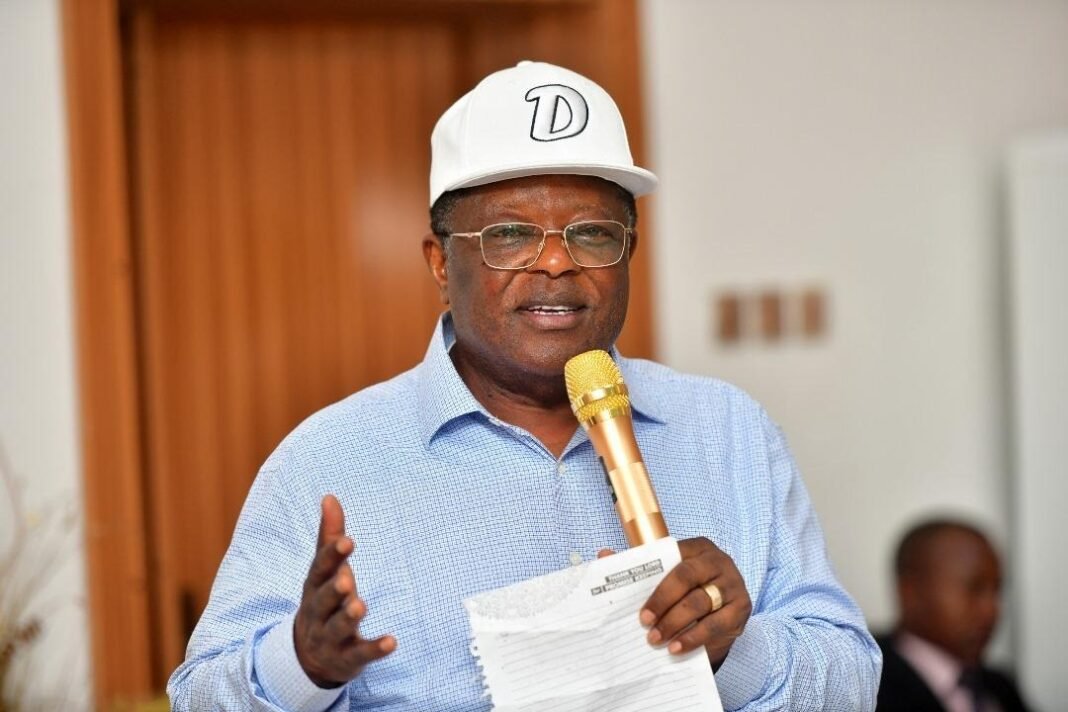
The Minister of Works, David Umahi, has stepped into an emerging political disagreement in the Ebonyi Central Senatorial District, delivering a clear and timely message.
He urged stakeholders to close ranks, embrace consensus-building, and align with the direction of state leadership. This intervention comes at a decisive period as political activities gradually intensify ahead of the next election cycle in Nigeria.
At a time when unity determines strength, his call reflects both urgency and strategic foresight.
Why Internal Unity Cannot Be Ignored
Political disagreements are not unusual. They often arise from competing ambitions, differing strategies, and evolving interests.
However, when left unresolved, these disagreements can weaken structures that should remain strong.
David Umahi understands this reality. Therefore, his intervention seeks to prevent fragmentation before it escalates.
Unity creates clarity. It also strengthens coordination. More importantly, it builds confidence among supporters and stakeholders.
Without unity, even the most promising political structures can struggle to deliver results.
Consensus-Building as a Strategic Tool
Rather than imposing authority, David Umahi emphasized consensus-building.
This approach encourages dialogue, negotiation, and compromise.
Consensus does not eliminate differences. Instead, it aligns them toward a common goal.
In political systems, this method often produces stronger and more sustainable outcomes.
When stakeholders feel heard, they commit more fully. Consequently, unity becomes genuine rather than forced.
Aligning with State Leadership for Direction
Another key aspect of the Minister’s message focuses on alignment with state leadership.
Political structures operate best when they move in the same direction.
Fragmented leadership creates confusion. It also weakens strategic execution.
By urging alignment, David Umahi highlighted the importance of coordinated decision-making.
Such coordination ensures that efforts at the grassroots level connect effectively with broader political strategies.
As a result, campaigns become more organized and impactful.
Preparing Early for Electoral Success
Elections are not won only during campaigns. They are prepared long before.
Therefore, resolving disagreements early provides a significant advantage.
David Umahi’s intervention reflects this understanding. By addressing tensions now, stakeholders can focus on mobilization, engagement, and strategy.
Early unity allows time for planning. It also strengthens voter outreach and message consistency.
Consequently, political groups enter elections with confidence and structure.
The Broader Implications for Political Stability
The situation in the Ebonyi Central Senatorial District reflects a broader national reality.
Across Nigeria, political cohesion often determines outcomes.
When leaders promote unity, they contribute to stability. They also encourage constructive engagement rather than conflict.
David Umahi’s approach demonstrates how leadership can guide resolution without escalation.
This model can influence other regions facing similar challenges.
Leadership That Prioritizes Collective Progress
Effective leadership focuses on collective success rather than individual gain.
By calling for unity, David Umahi reinforces this principle.
He recognizes that progress depends on collaboration.
Stakeholders who work together achieve more. They also build stronger political institutions.
This mindset transforms competition into cooperation.
Conclusion: Unity as the Foundation for Victory
The intervention by David Umahi carries a clear message.
Political strength begins with unity.
By urging stakeholders in the Ebonyi Central Senatorial District to close ranks and embrace consensus, he sets a path toward stability and success.
As the next election cycle approaches, this call becomes even more significant.
Ultimately, unity is not just a strategy. It is a foundation.
When stakeholders align, collaborate, and move with purpose, they position themselves for lasting impact in Nigeria.