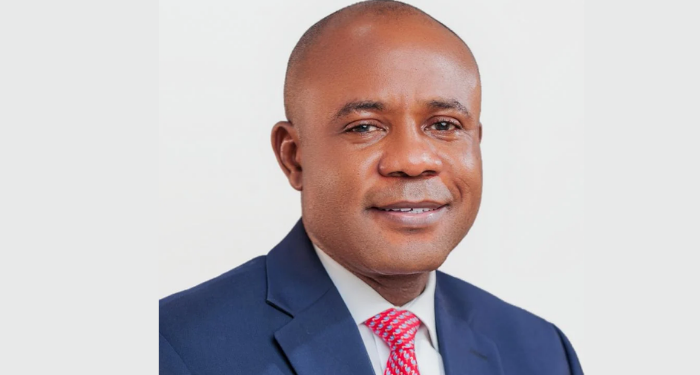
Nigeria’s Minister of Works, Dave Umahi, has strongly denied allegations circulating on social media and other platforms suggesting that he was responsible for the death of a female nurse, Mary Habila, at his residence in Uburu, Ebonyi State.
Responding to the claims, the minister described the allegations as false, malicious, and completely unfounded, insisting that he had no involvement whatsoever in the circumstances surrounding the nurse’s death.
Furthermore, Umahi stated that the reports were the product of misinformation designed to damage his reputation and mislead members of the public. He urged Nigerians to disregard what he described as fabricated stories while encouraging citizens to rely on verified information instead of rumours circulating online.
The minister maintained that spreading unverified allegations not only harms individuals but also undermines responsible public discourse and confidence in factual reporting.
Umahi Rejects the Allegations
Dave Umahi categorically dismissed the claims linking him to the death of Mary Habila.
Furthermore, he insisted that the accusations lacked any factual basis and should not be treated as credible by members of the public.
According to the minister, false narratives often spread rapidly through social media without proper verification, creating confusion and unnecessary public anxiety.
Facts must guide public discussions.
He emphasised that allegations involving criminal conduct should always be investigated through appropriate legal and law enforcement processes rather than being decided through speculation or online commentary.
Warning Against Misinformation
Umahi expressed concern about the increasing spread of misinformation through digital platforms.
Furthermore, he noted that false reports can easily damage reputations, create unnecessary public tension, and distract attention from genuine national issues requiring constructive engagement.
The minister encouraged Nigerians to verify information before sharing it with others.
Responsible communication protects society.
He stressed that every citizen has a responsibility to ensure that information circulating within the public domain is accurate and supported by credible evidence.
Importance of Due Process
The minister reaffirmed his confidence in Nigeria’s legal and judicial institutions.
Furthermore, he maintained that any allegation involving criminal matters should be handled through lawful investigations conducted by the appropriate authorities rather than through public speculation.
Due process protects justice.
He argued that allowing rumours to replace factual investigations undermines the principles of fairness, accountability, and the rule of law upon which democratic societies depend.
Umahi urged Nigerians to respect established legal procedures whenever sensitive matters arise.
Public Figures and False Allegations
The Works Minister observed that public officials frequently become targets of misinformation and unfounded allegations.
Furthermore, he explained that occupying public office often exposes individuals to intense public scrutiny, making responsible reporting even more important.
Public accountability remains essential.
However, accountability should always be based on verified facts rather than assumptions, rumours, or deliberate misinformation.
The minister stressed that protecting truth remains in the interest of both public officials and ordinary citizens alike.
Encouraging Responsible Journalism
Umahi also appealed to media organisations and digital content creators to uphold professional standards when reporting sensitive matters.
Furthermore, he encouraged journalists to verify facts thoroughly before publication while avoiding sensational reporting capable of misleading audiences.
Credible journalism strengthens democracy.
He noted that accurate reporting contributes significantly to public trust, social stability, and informed decision-making.
The minister urged all media practitioners to remain committed to fairness, balance, and factual accuracy.
The Role of Social Media Users
The minister emphasised that ordinary citizens equally play an important role in preventing the spread of misinformation.
Furthermore, individuals should avoid forwarding or reposting unverified information simply because it appears online.
Digital responsibility benefits everyone.
He encouraged Nigerians to confirm information through reliable sources before accepting or sharing it with others.
According to Umahi, responsible use of social media contributes to healthier public conversations while reducing the harmful impact of false narratives.
Maintaining Public Confidence
Dave Umahi reiterated that public confidence in institutions depends largely on truth, transparency, and responsible communication.
Furthermore, he assured Nigerians that he remains committed to serving the country in his capacity as Minister of Works while continuing to support ongoing infrastructure development projects across the nation.
He stated that distractions created by misinformation would not prevent him from carrying out his official responsibilities.
Leadership requires focus.
The minister reaffirmed his dedication to delivering critical road and infrastructure projects that support national development.
A Call for Truth and Responsibility
Concluding his response, Dave Umahi urged Nigerians to reject misinformation and remain committed to promoting truth, fairness, and responsible public engagement.
Furthermore, he reiterated that the allegations linking him to the death of Mary Habila are entirely false and should not be regarded as factual.
He encouraged citizens, media organisations, and digital platforms to prioritise verified information while allowing relevant authorities to address sensitive matters through lawful and transparent processes.
According to the minister, protecting the integrity of public discourse requires collective responsibility, respect for due process, and an unwavering commitment to factual reporting, values that remain essential for strengthening democracy, preserving public trust, and promoting national unity.